AS-Motor insect scare device: design & field trial

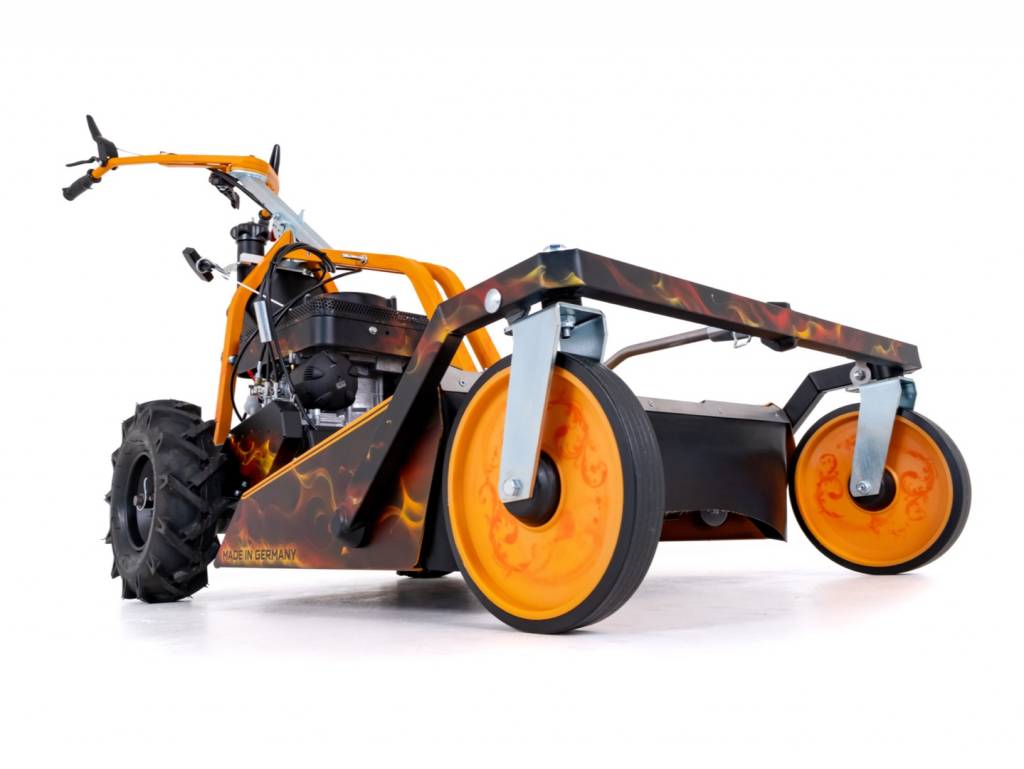
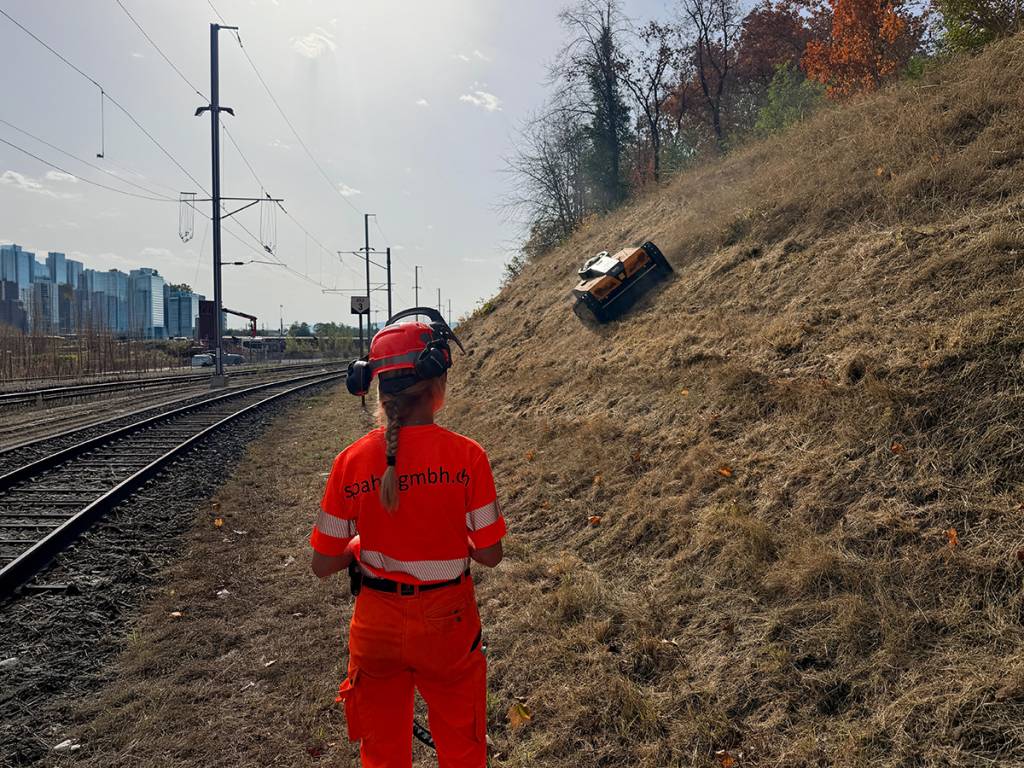
AS-Motor's insect scare device brings a flexible bar into contact with high grass before the mower's cutting tools reach it. The attachment is available for selected walk-behind, ride-on & remote-controlled mowers, using adapters matched to the carrier machine. Research at the University of Hohenheim examined its effect on flying insects in a flowering meadow.
Disturbing vegetation ahead of the cut
Mowing an extensively managed meadow involves cutting vegetation that also provides habitat for insects & other animals. Where the management objective is to retain open grassland, periodic cutting can limit scrub growth. The practical question is how to organise that work around the habitat, the terrain & the vegetation that needs to remain standing.
The insect scare device adds contact with the plants ahead of the cutting area. Its purpose is to trigger an escape response before insects encounter the mower's cutting tools. That advance disturbance can be included in a mowing plan alongside retained refuge areas & dates chosen for the site's target species.
Adjustable reach & a flexible front bar
The device uses an elastic plastic bar mounted in front of the mower. As the machine moves, the bar passes through the vegetation. Height & forward reach are adjustable, so its position can be matched to the structure of the growth within the permitted settings for the machine.
Flexibility allows the bar to yield when it contacts smaller obstacles. The mounting mechanism can also fold back, with adjustable resistance determining when it gives way. Folding the attachment brings it closer to the machine for transport. These features address the obstacles & access constraints encountered when mowing around trees or working on uneven ground.
The core device is shared across the listed machine types; the mounting adapter differs. The range includes selected Allmäher® models, AS 701 SM & AS 901 SM flail mowers, and machines from the Sherpa, YAK & Ovis families. The product page lists compatible models & fitting information.
What the insect scare device field trial found
Elias Windmüller investigated the attachment as part of his bachelor's research at the University of Hohenheim's Institute of Agricultural Engineering, supervised by Dr Jörg Morhard. A paper reporting part of the work appeared in RASEN · TURF · GAZON in 2025.
For the field trial, an AS 63 2T ES worked in a flowering meadow with vegetation approximately 70–90 cm high & a high proportion of herbaceous plants. Eight comparable strips were selected for repeated runs with and without the device. A net-covered catch frame ahead of the cutting area intercepted flying insects, which were counted after each run & released.
The catch frame recorded an average of 7.3 flying insects per run with the insect scare device, compared with 2.5 without it. The standard deviation was 1.9 with the device & 1.1 without it. Under these trial conditions, almost three times as many flying insects were caught with the device.
The counts were small, insects were not separated by species & survival after mowing was not measured. The result therefore describes the catch-frame comparison with this AS 63 2T ES, rather than a survival rate or a quantified result for every compatible mower.
The author discusses sufficient forward reach as a way of giving responding insects time & space to move before the cutting tools arrive. The device's adjustment should follow the fitting instructions for the particular machine and the vegetation being mown.
Cutting height was examined in a separate experiment
The research also explored mechanical effects using test objects placed in vegetation. In one comparison with an experimental single-bar blade, a 10 cm cut left more objects undamaged than a 5 cm cut. Blade arrangement & vegetation height were also investigated.
These objects were substitutes, not living insects. The author states that transfer of the findings to living insects remains unresolved. The experimental blade arrangement is not an instruction to remove or alter mower blades; operators should use approved configurations & settings for their machine.
For meadow owners & mowing teams, the attachment sits within a wider maintenance plan. Retained vegetation, mowing dates & the handling of cut grass still need to be decided for each site. The AS-Motor ecological mowing guide covers those decisions.
View the AS-Motor insect scare device & compatible mowers.
Research source