AS-Motor offers solutions for meadow orchards
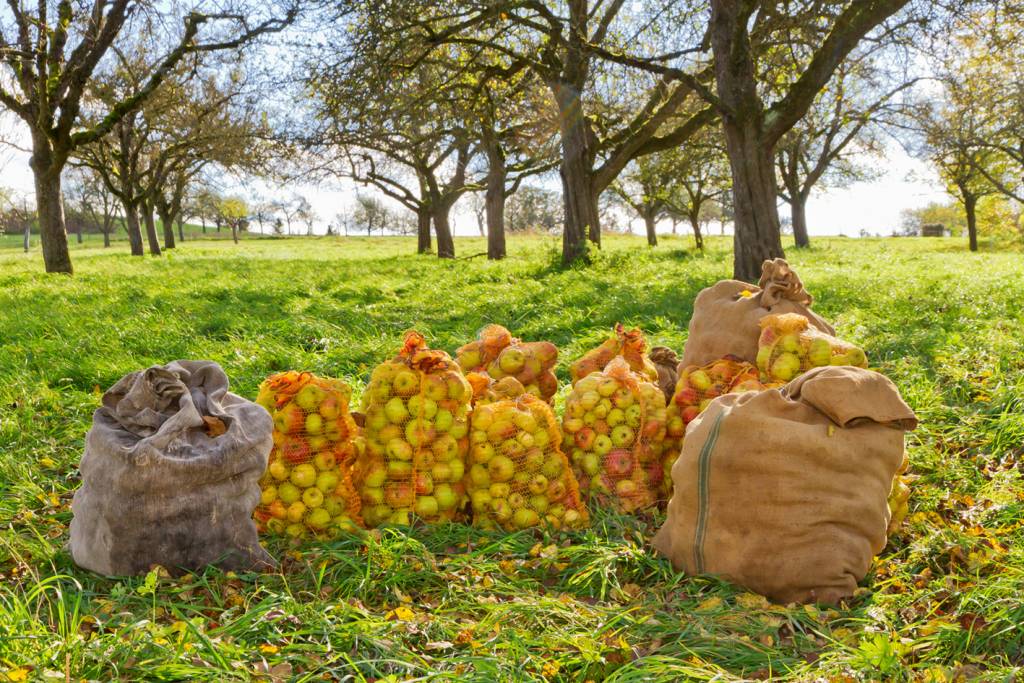
Our expertise in rough terrain and slope mowing makes AS-Motor the equipment of choice for use in meadow orchards.
Orchard meadows are typically managed extensively. Since the decline of the use as meadow for hay production and cattle pasture, these areas are often left to their own devices. Due to the lack of maintenance and the increasing overgrowth, the flora and fauna characteristic of this cultural landscape are changing. To preserve orchard meadows, they should be mowed at least once a year.
Mowing of grassland is usually done twice a year, in June and September. In order to maintain grassland in an ecologically meaningful way, a single mowing at the end of the vegetation period, in mid-September, is sufficient.
To give insects and bees enough time to collect nectar and pollinate flowers, the following tips should be considered:
- Allow dandelions and clover to flower out.
- Mow large areas staggered, in two stages. Time interval 3 – 4 weeks.
- Ideal mowing times: Early in the morning or late in the evening.
Learn more about ecologically oriented green space maintenance.
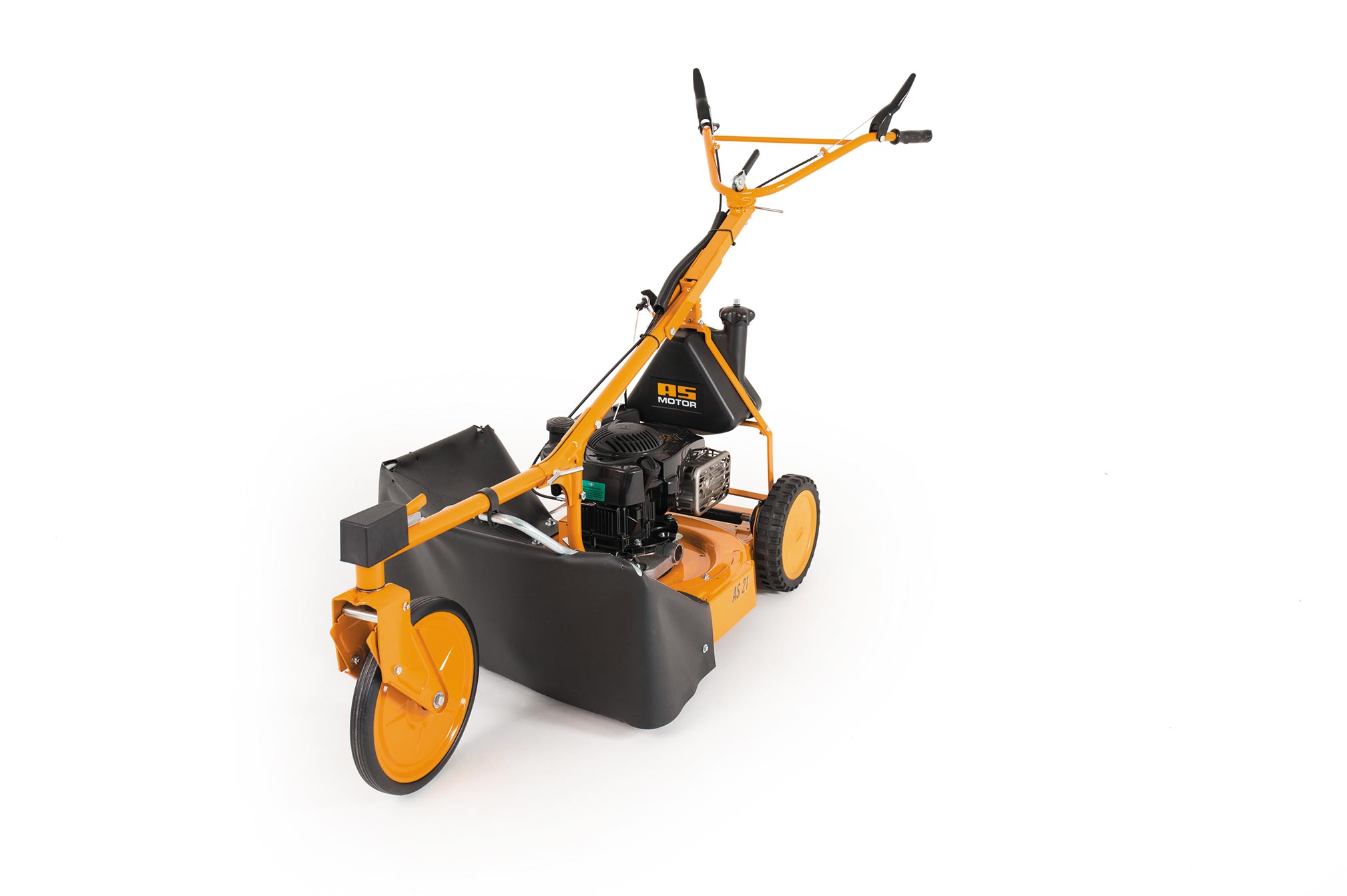
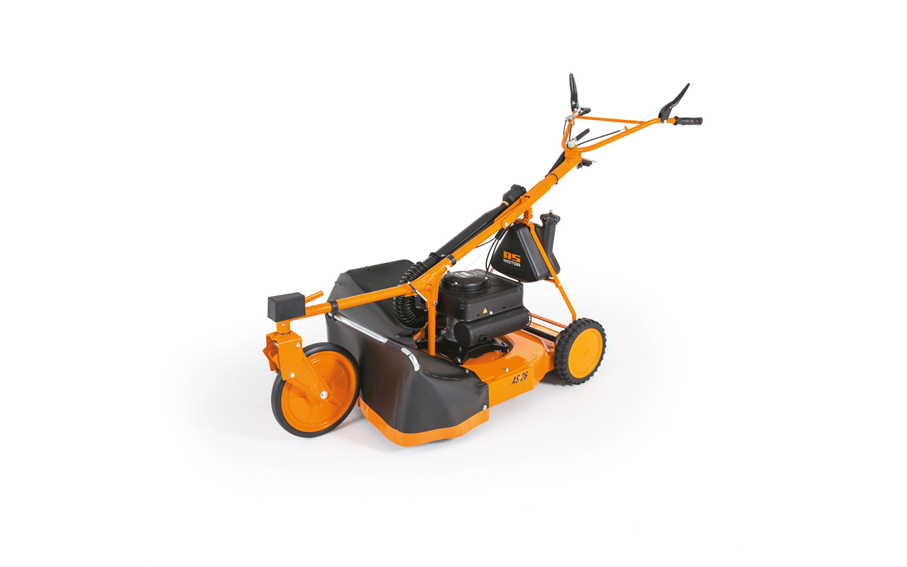
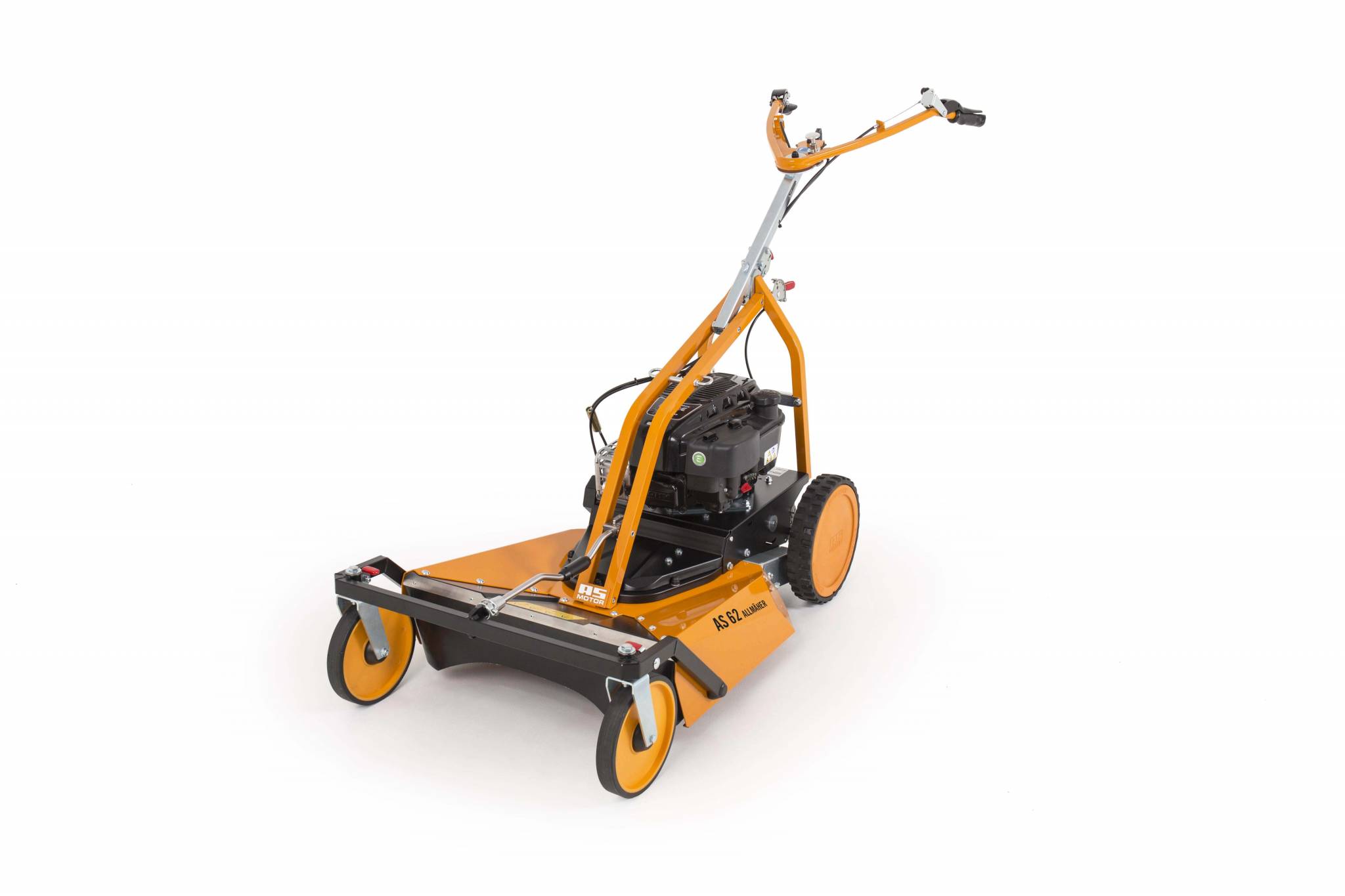
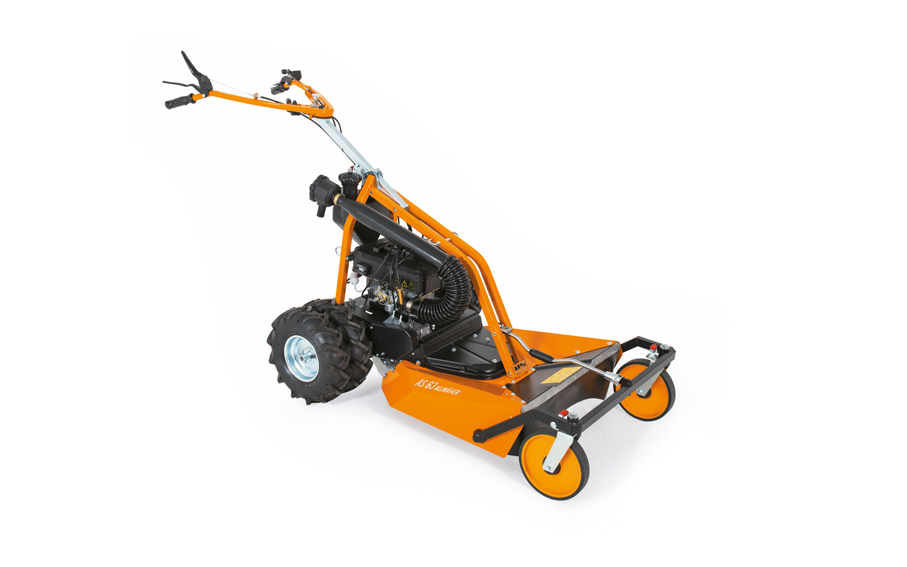
For the maintenance of orchards AS-Motor offers a whole range of suitable machines. Differences of the machines are mainly in the area performance, the mulching result and the comfort for the operator. AS-Motor’s mulching mowers excel at clearing thick growth and high grass, while AS-Motor’s 2-stroke powered machines are ideally suited for maintaining steep areas surrounding the orchards.
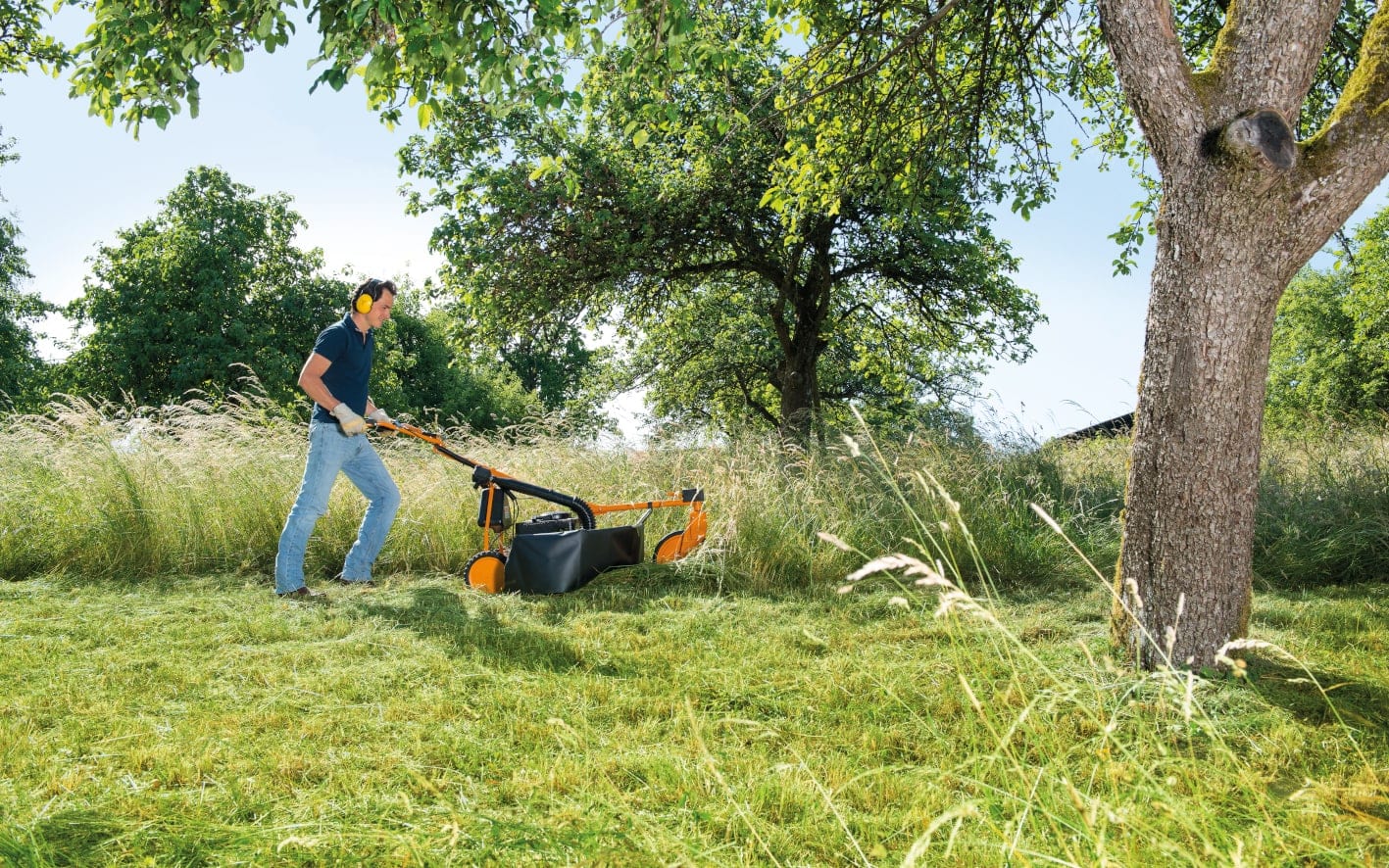
Application examples
High grass mowing
AS-Motor offers several high grass mowing solutions depending on the cutting force required. A high performance engine is recommended for meadow orchards that will only be mowed once per year. AS-Motor’s smaller machines are suitable for meadows that will be mowed several times per year.
Slopes
Only certain engines are suitable for mowing on slopes. Standard 4-stroke engines can handle inclines below 20 degrees, while specialized 4-stroke engines can work on slightly higher inclines. The best solution for slopes, however, is the AS 165 ES 2-stroke engine which can power a mower safely up inclines that exceed 45 degrees.
High grass mulching
AS-Motor Allmähers and ride-on mowers are often equipped with special cross-blades and closed mulching mower decks that cut grass several times and generate a fine, uniform layer of mulch that then decomposes as natural fertiliser. This process eliminates the risk of rotten areas in the orchard.
Mowing dense growth
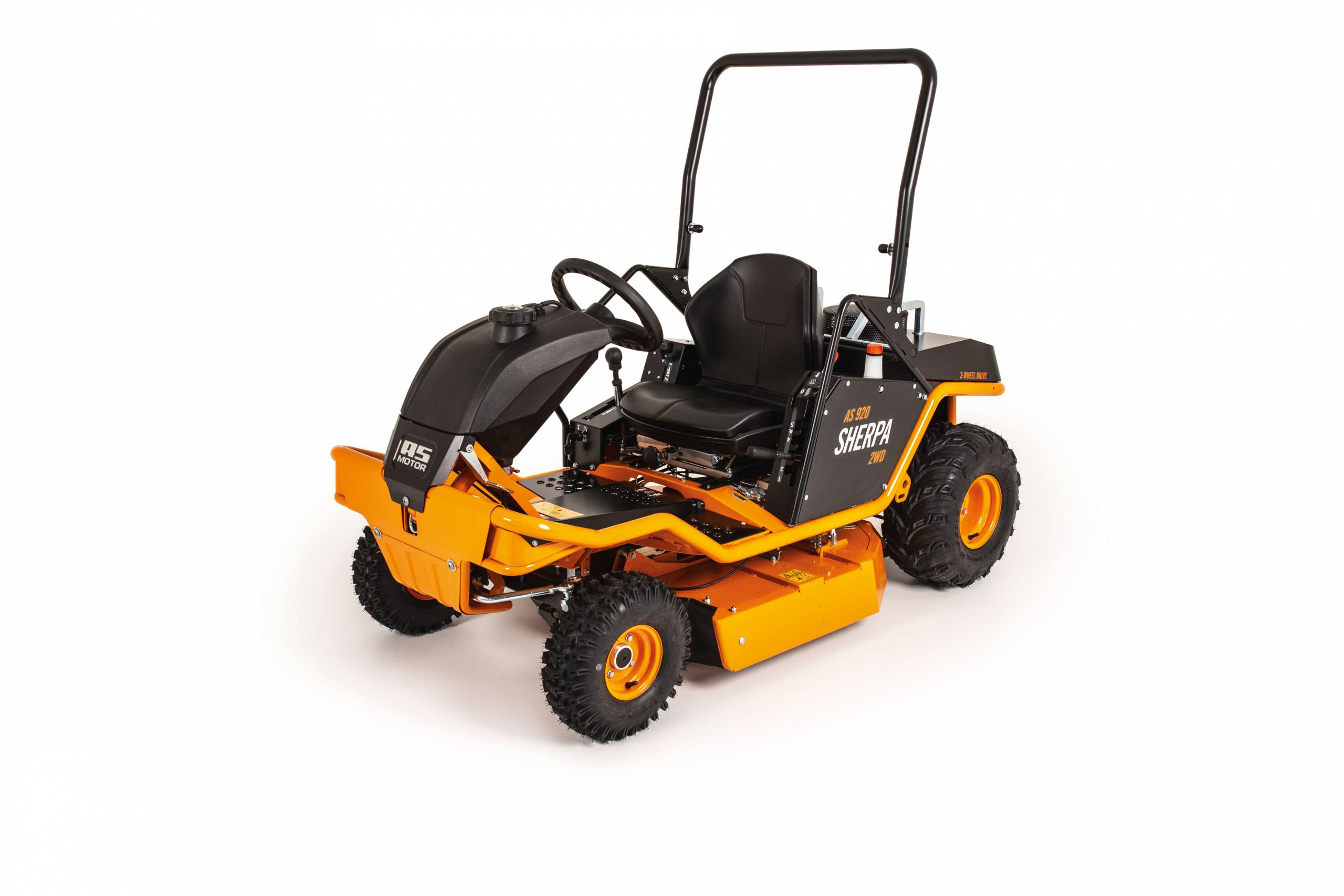
Dense growth and fast-growing saplings can quickly encroach onto meadow orchards. AS-Motor’s Allmähers easily tackle dense growth, while AS flail mowers and the AS Sherpa deliver more robust cutting performance.

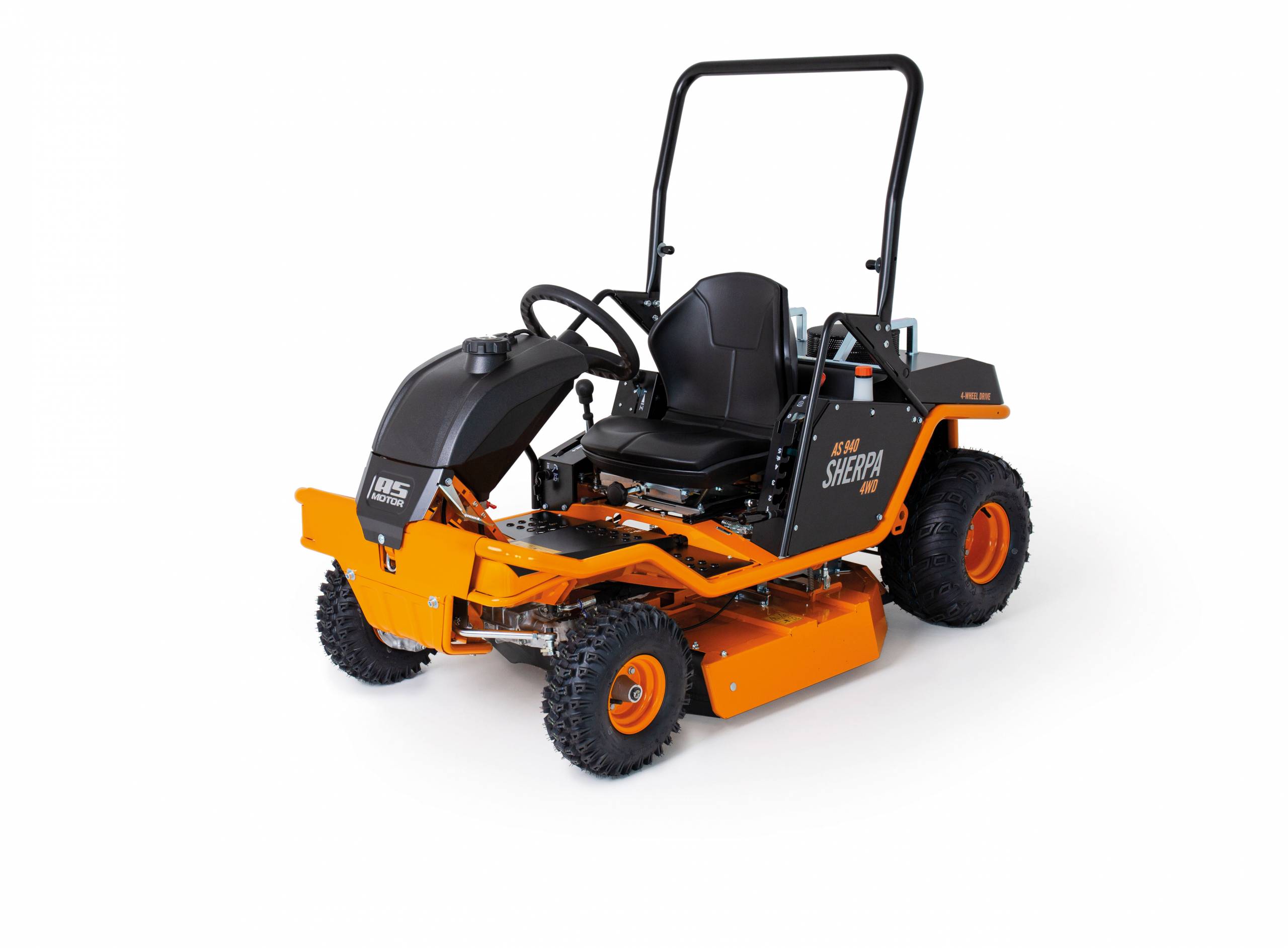
Use in orchard meadows is also an area where the AS mower can show off its advantages such as manoeuvrability and low overall height. When a tractor with a mulcher can no longer be used due to low branches, the Sherpa 940 4WD RC can easily drive under low-hanging branches without damaging or tearing off branches. Should the situation require it, it is very easy to switch the AS Sherpa 4WD RC to radio operation and carry out dangerous or dusty mowing runs with maximum safety for the equipment operator. Just fold down the safety bar, switch to RC operation and off you go.
– Günther Wünsch (Owner Wünsch Forestry Services, Germany)

Structural change does not stop at the cultivation of our orchard meadows. In order to make it attractive for future generations, we decided to buy a Sherpa. We tested the core competitors in comparison, deciding on an AS 940 Sherpa 4WD due to its handling, equipment and off-road capability as a 4WD model. The limited special model Adventure leaves nothing to be desired.
– Volker Gaupp (private user from Weinstadt, Germany)

AS 1040 YAK 4WD effortlessly mows our orchard meadows. It drives up and down steep slopes without any problems, where the bar mower almost went on strike. And it mows three times as fast as the bar mower. In addition, you are well rested afterwards because you sit very comfortably on the YAK. No matter how steep it is, you feel safe because the YAK has a low centre of gravity. All in all, a brilliant machine!
– Christoph Grossenbacher (Orchard meadows owner Germany)

After the first mowing with my AS 63 mower, my chestnut and apricot garden looks top-maintained again. Congratulations on your great products!
– Fritz Urbanek (from Krems, Austria)

They still exist: garden tools with durability from the past paired with the technology of today. More than 20 years ago, my father had bought a second-hand AS 53 2T lawn mower for the regular mowing of an orchard of about 2,000 m², which still performs its services reliably today; before that, the mower had already been in use for more than 10 years at the road administration. In parallel, we had two others AS 53 2Ts that were older and that we could still sell for good money. If you buy an AS mower new and use it privately, it will probably last a lifetime. Basically, of course, as with all machines, you have to look after them and handle them sensibly.
– Joachim Follmann (private user, Germany)

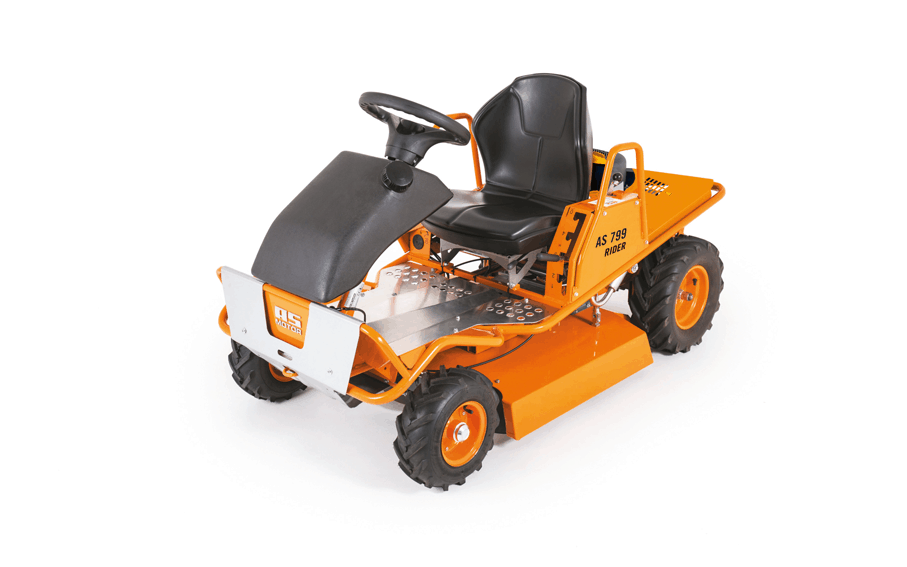
This machine convinced me already during the 1st mowing operation, so that I do not shed a tear for our former tractor with attached mulch mower. Efficient, manoeuvrable, powerful and a excellent mowing result characterise my new AS 800 FreeRider; and on top of that it takes up very little space in the tool shed when not in use. In addition to my new AS 800 ride-on mower, we own an AS 28 2T ES for several years now, with which we are also very satisfied. My father swears to it. It is used on steep sections and on embankments/ditches. I bought the machine at Hagenlocher in Hbg-Gültstein - Hagelocher is always a competent and trustworthy dealer, also when it comes to service works. My conclusion: "If there were such great, well thought-out and reliable products for all live situations as AS motorised equipment, the world would be simply perfect!
– Klaus Haarer (from Herrenberg, Germany)

Even my grandmother had an AS mower, which at the time was still red and white and had a front wheel with spokes that looked like a bicycle. And my parents had orchards and vineyards... which could only be mowed a scythe or an AS mower.
– Michael Horlacher (Hobby gardener and winemaker, Stuttgart)

I would have never believed that the AS 63 2T could mow this embankment with a 38 degree incline, but it does.
– Florian Haug (student in agricultural sciences, Grossglattbach, Germany)

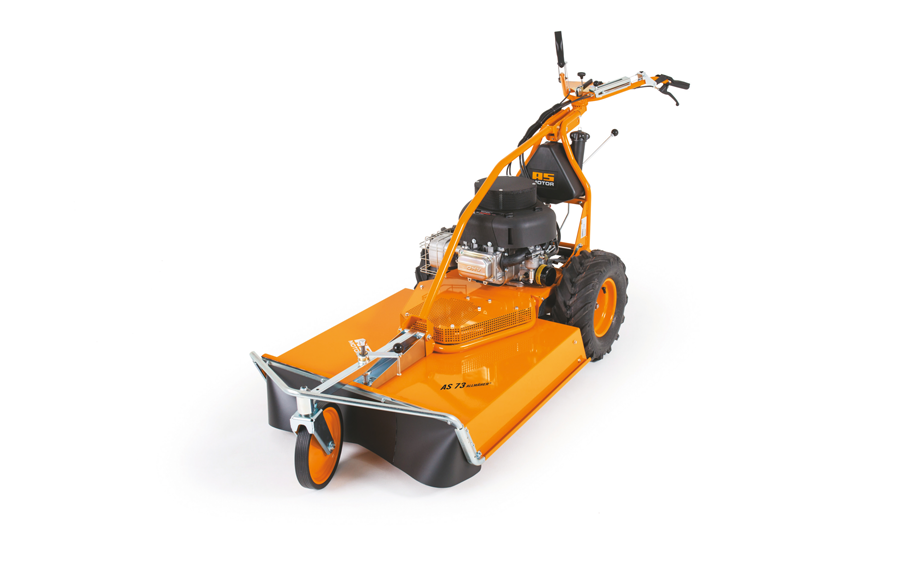
With our AS 73 4T Allmäher we mow our meadow orchards more than three times faster than we did with a brush-cutter.
– Roman Mühleck (AS-Motor product manager, Karlstadt am Main, Germany)
Categories

Flower meadows
Flower meadows are structurally rich habitats that are extremely important for insects, wild bees, and species that depend on flowers. The key is not to mow frequently, but to cut at the right time. Before the flowering phase, the vegetation can quickly reach heights of 30–40 cm. After that, maintenance is carried out at longer intervals, usually once or twice a year.
This form of extensive use requires machines that can safely cut tall, heterogeneous vegetation without putting unnecessary strain on the area. Clean cuts, controlled deposition, and an adapted driving style are essential for preserving plant populations and enabling regeneration.
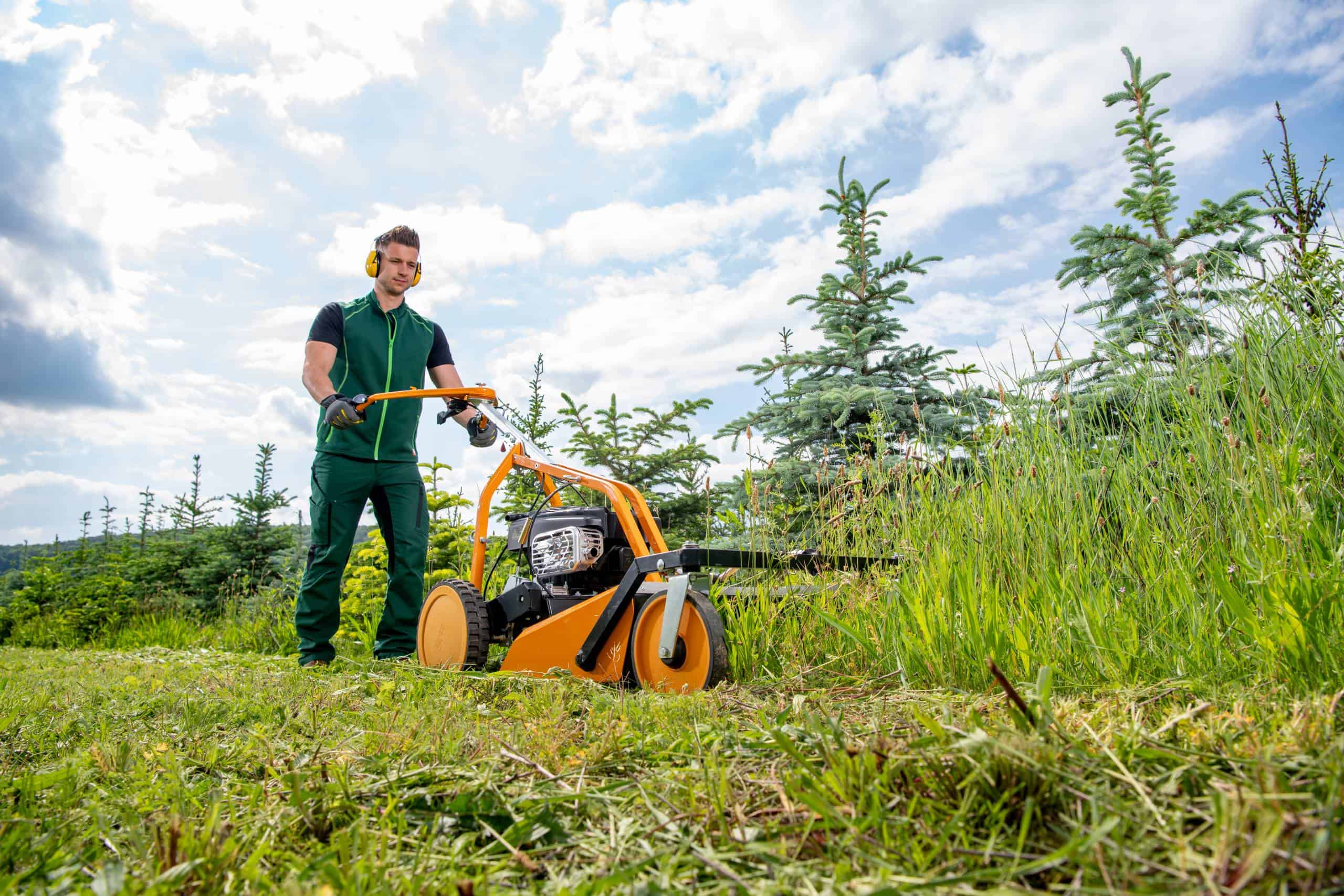
High meadow grass
Extensively used meadows such as orchards, compensation areas, or roadside greenery are deliberately mowed only once or twice a year. The vegetation reaches heights of 60 to over 100 cm and forms dense, structurally rich stands.
This form of maintenance serves to keep the area open and suppress woody plants, not to maintain the lawn. Machines with high throughput, uniform cutting performance, and controlled deposition of the cut material are required. This is the only way to efficiently manage large amounts of biomass without overloading the area or damaging the soil and vegetation.

Mulching
Mulching is a process by which grass cuttings are shredded several times into a fine mulch, which then remains on the surface as natural fertiliser. Special mulching blades with a double cutting plane and a circular mulching unit are used on ornamental lawns, while cross-blade systems or flail mowers are primarily used in high grass.
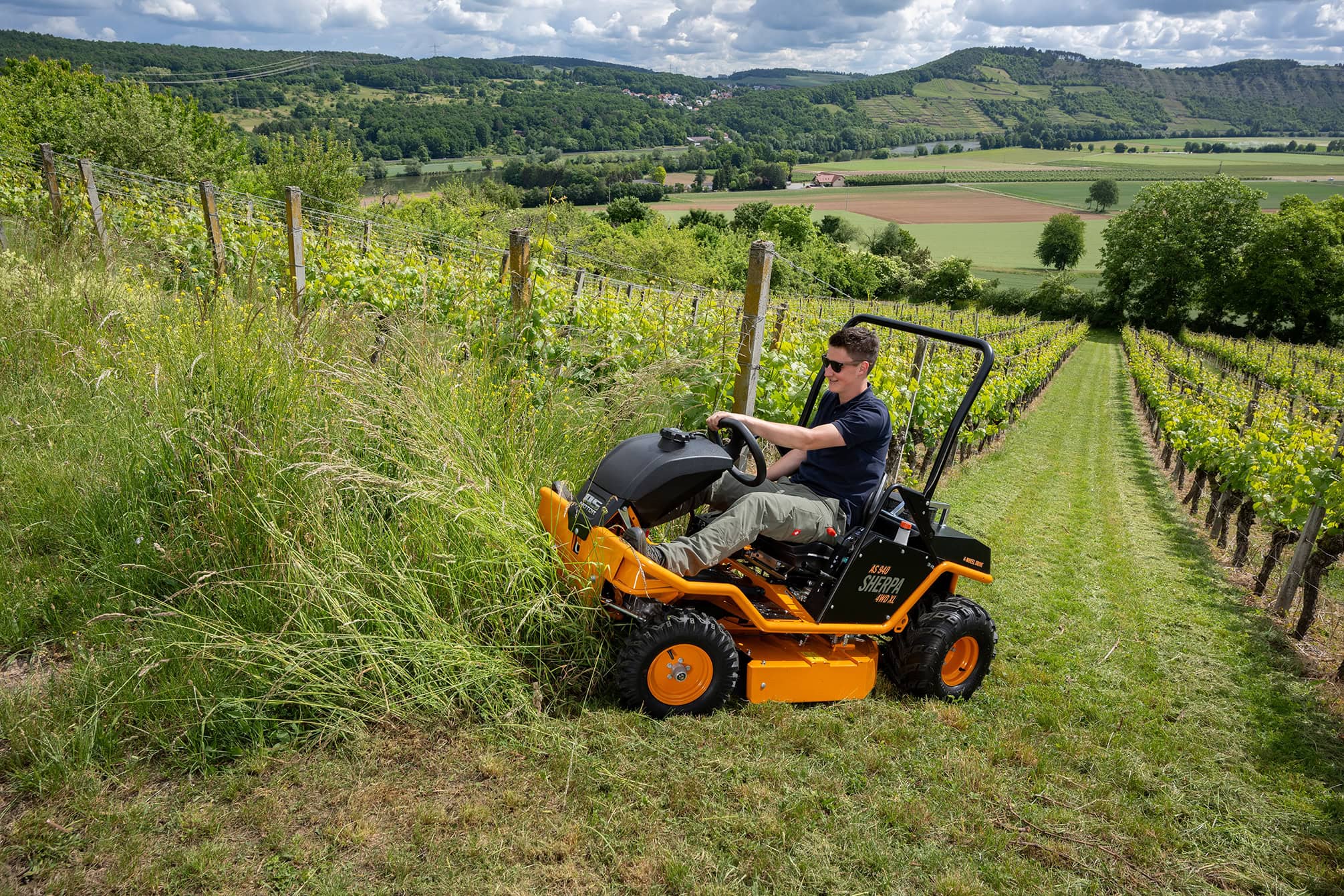
Slopes
AS-Motor engineers machines with high ground clearance, steep ramp angles, low overall weight, optimal weight distribution and a low centre of gravity to perform on slopes.

Uneven terrain
Animal burrows, anthills, mole hills and water channels cause uneven terrain. Several AS-Motor machines have high ground clearance, all-wheel drive and limited slip differential, along with appropriately studded field tyres, for uneven terrain.
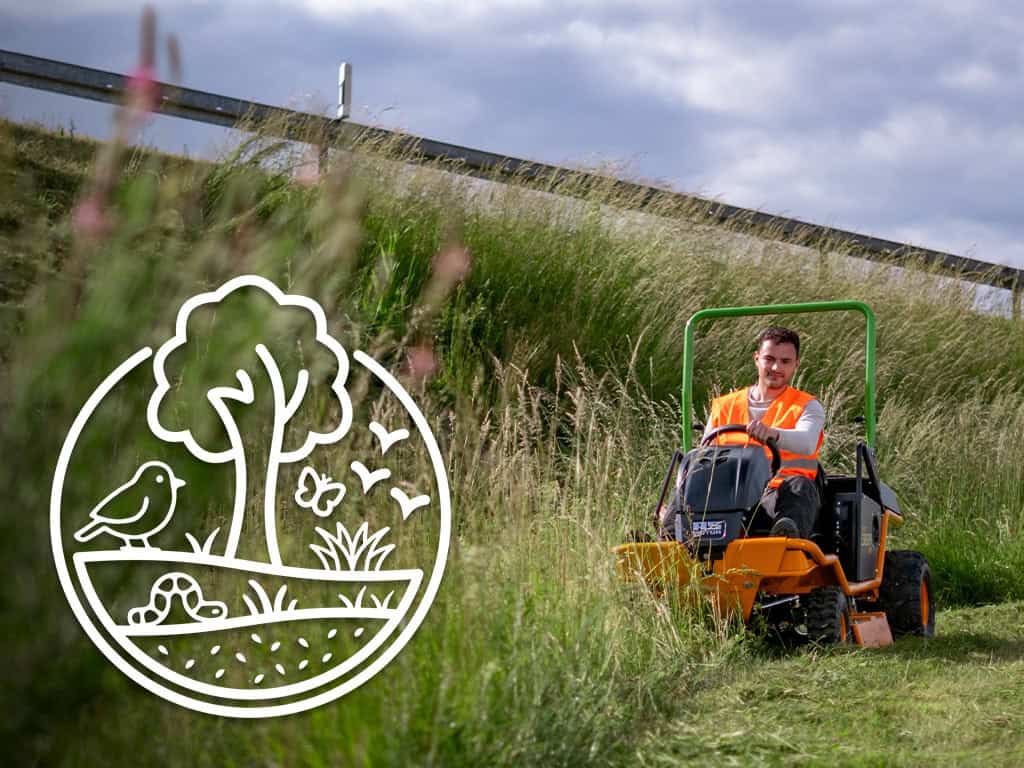
Ecological mowing & extensive land management
Ecological mowing and extensive land management focus on reduced, targeted interventions instead of blanket mowing. Cutting heights, timing, and maintenance intervals are based on vegetation development and site conditions, not on maximum area coverage.
Sub-areas are mowed on a rotating basis, while others are deliberately left untouched. This creates varying growth heights, refuges, and stable structures on extensive meadows, compensation areas, municipal green spaces, and in landscape management. Technology is used for control, not intensification.