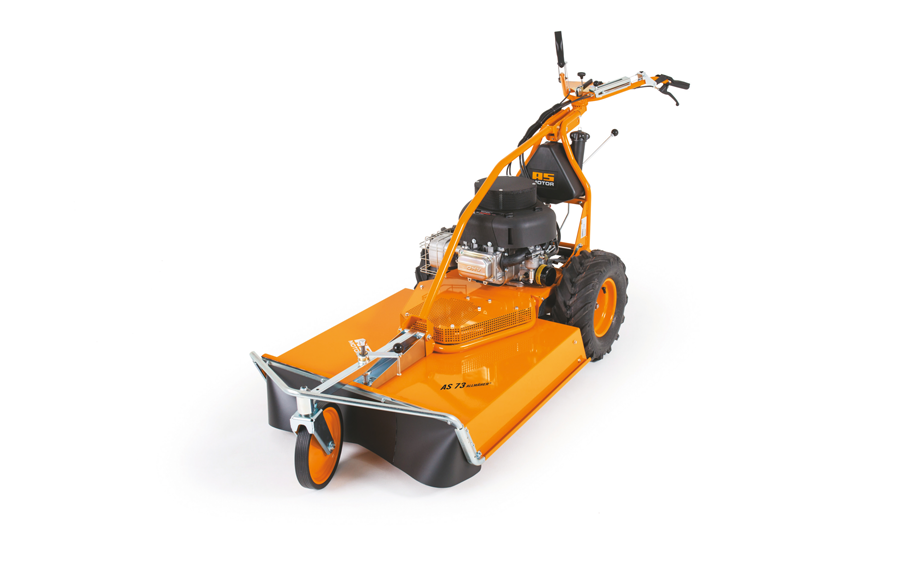
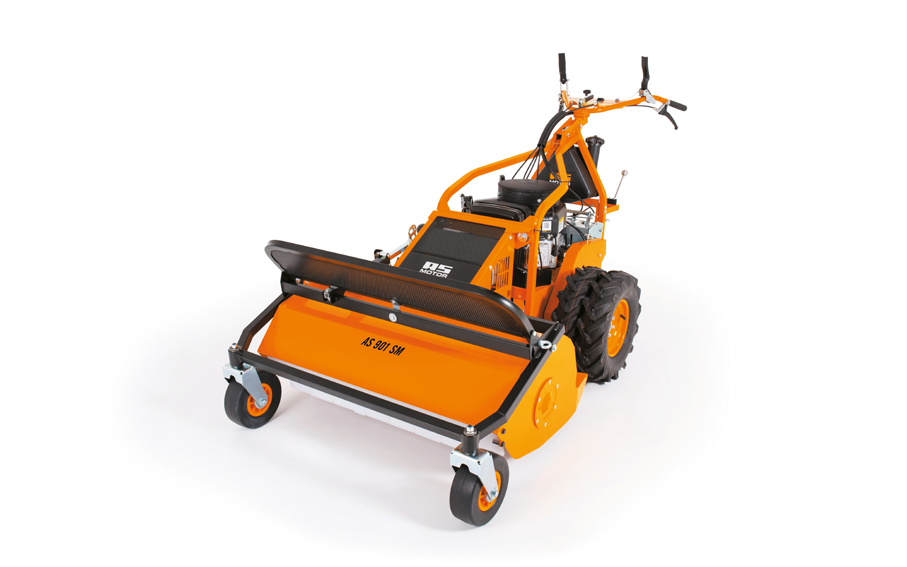
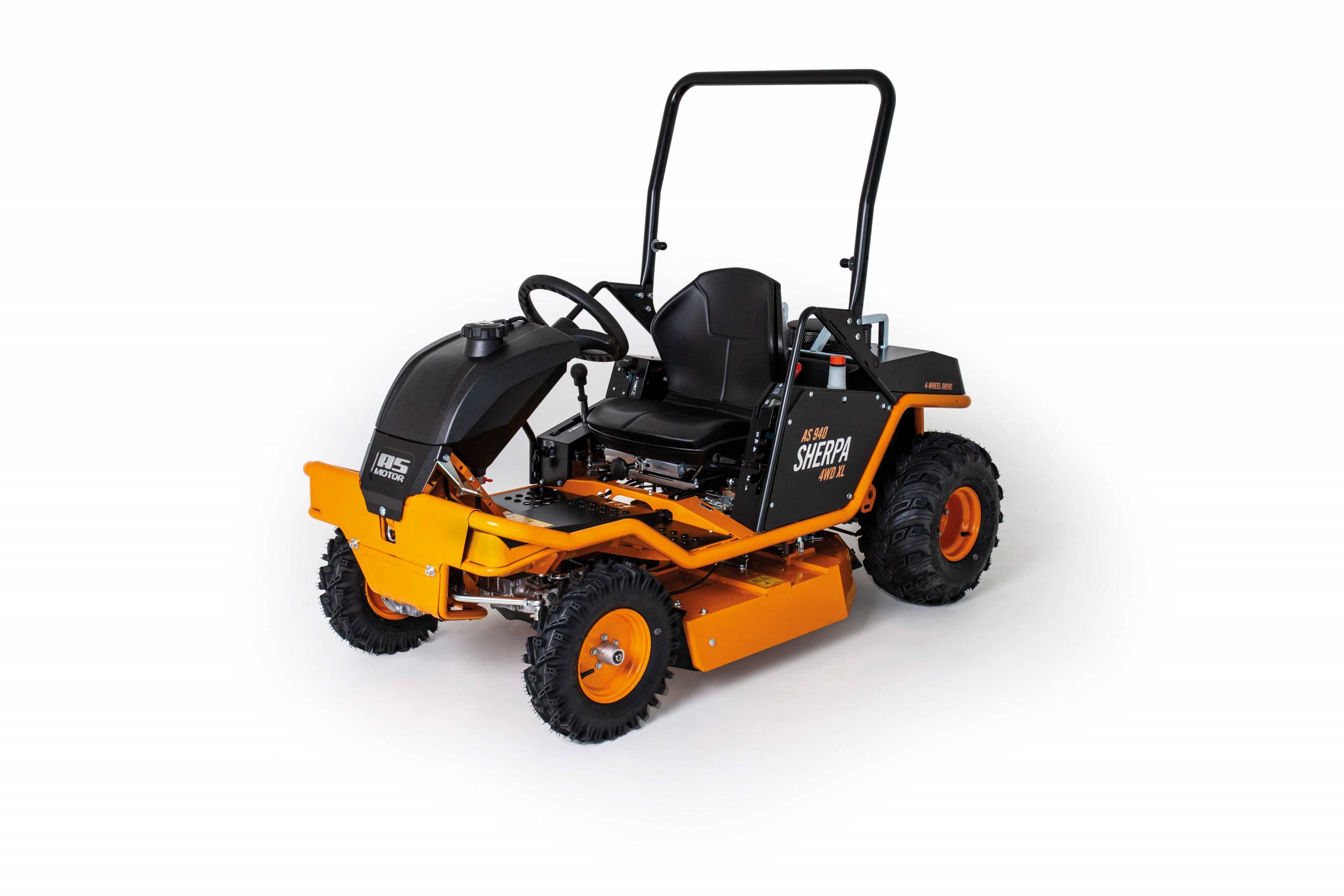
AS-Motor offers solutions for hunting grounds management and forestry
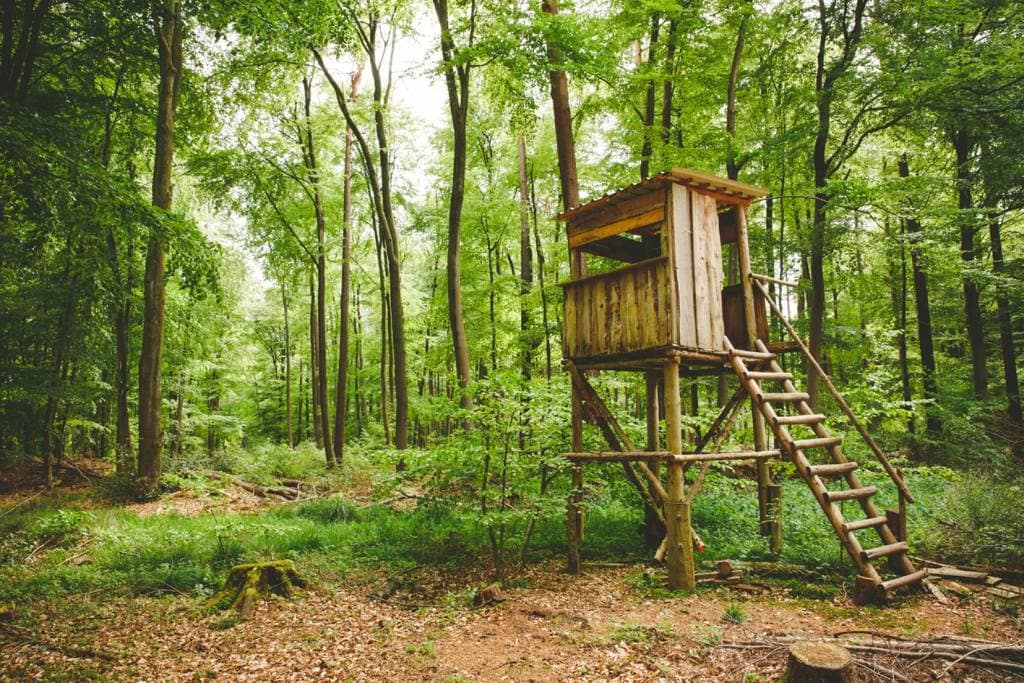
Robust design is an advantage when caring for young forest areas, keeping forest paths clear and maintaining densely forested hunting grounds.
Application examples
Forestry
Sustainable forest management relies on the correct balance between economy and ecology. Flail mowers can be used effectively for maintaining forest margins or removing saplings up to 20 mm thick.
Hunting grounds
The daily work of hunting grounds management includes keeping stalking paths and clearings maintained for easier game spotting. Also, hunters often fence off fields to reduce the damage done by game. These fences must be mowed at regular intervals to preserve electrical conductivity and AS-Motor’s walk-behind Allmähers provide the precision handling needed for this purpose. When game damage cannot be avoided, e.g. damage caused by wild boars on grassland, AS-Motor’s flail mowers can level out the terrain.
Christmas tree plantations
The majority of the approximately 25 million Christmas trees sold annually are cultivated on professional plantations. If the grass between lanes grows too high, the Christmas trees’ lower branches lack access to light and start to lose their needles. For this special application, AS-Motor offers walk-behind mowers with branch deflectors that push branches upward while mowing. Flail mowers and ride-on Sherpa mowers are also ideally suited for use on Christmas tree plantations:
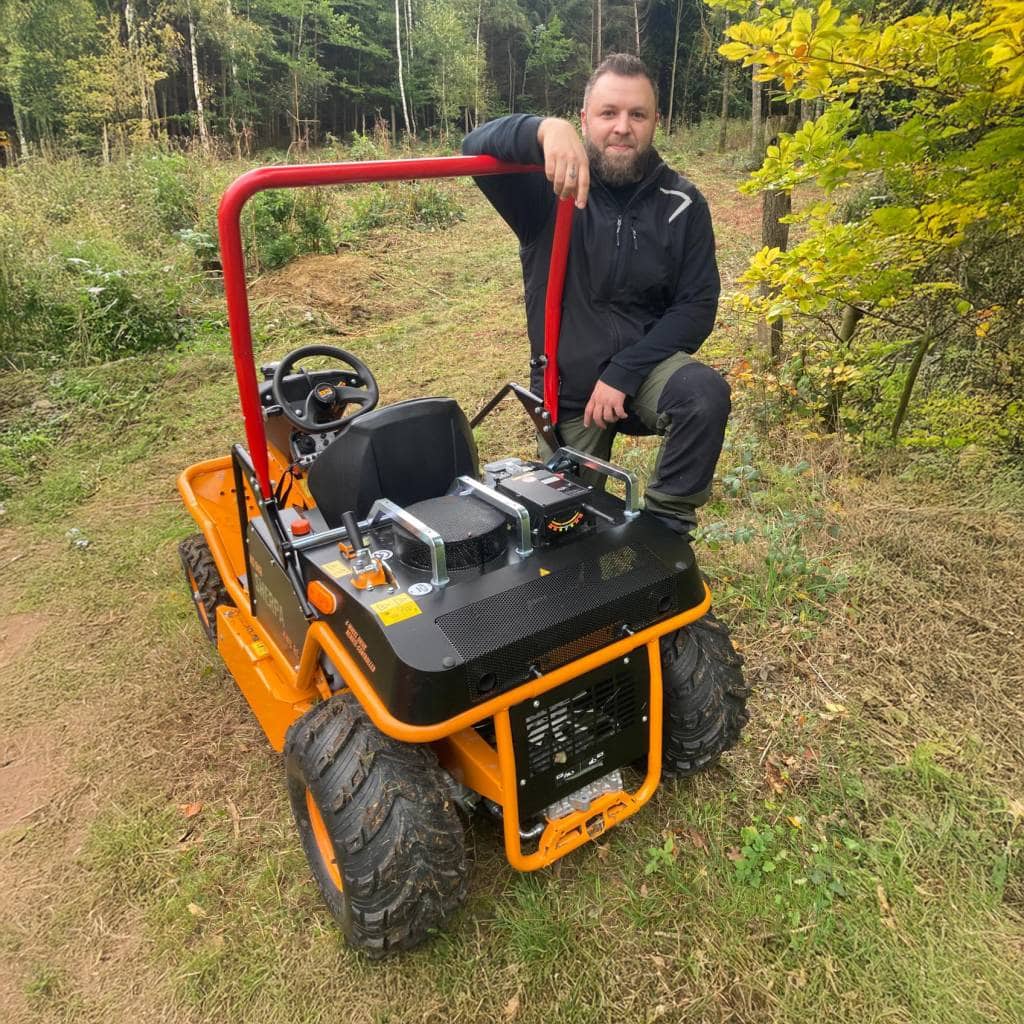
The AS 940 Sherpa 4WD RC is the ideal machine for dense scrub and steep terrain. In remote control mode, the Sherpa really shows its strength. I can operate it from a safe distance, staying well out of the danger zone, while the mower powers through tough, overgrown vegetation without hesitation. Its strong traction, low centre of gravity, and solid construction ensure maximum stability and control, even on challenging slopes. In my daily work, one thing matters most: safety without compromise on performance – and that’s exactly what the AS 940 Sherpa 4WD RC delivers.
– Lukas Deschl, Forester & Tree Care Specialist, Osterhofen

AS 901 is our constant companion in the training area. The powerhouse has to deal with 2-metre high reeds, bushes and grass. It unconditionally creates free space for the birds and insects. It is agile, powerful and is equipped to deal with all challenges.
– Oliver Thärig (National Hunting Association Sachsen-Anhalt, Germany)

Time is a precious commodity which is why I'm the proud owner of an AS 940 XL.
– Udo Köhler (FMC Building Contractors, Frankfurt am Main, Germany)

The machine’s low centre of gravity gives you a safe feeling, even on very uneven terrain. I am quite tall and still sit very comfortably with enough space – this never happens with ride-on mowers.
– Heiner Lorenz (Christmas tree plantations – Heiner Lorenz, Germany)
Categories

Professional technology
During the mowing season, professional operators often run their machines 5 days per week, 8 hours per day. AS-Motor’s machines are unbeatable in terms of quality, durability and professional work results. Additional advantages include low weight, lashing points and compact transport dimensions.
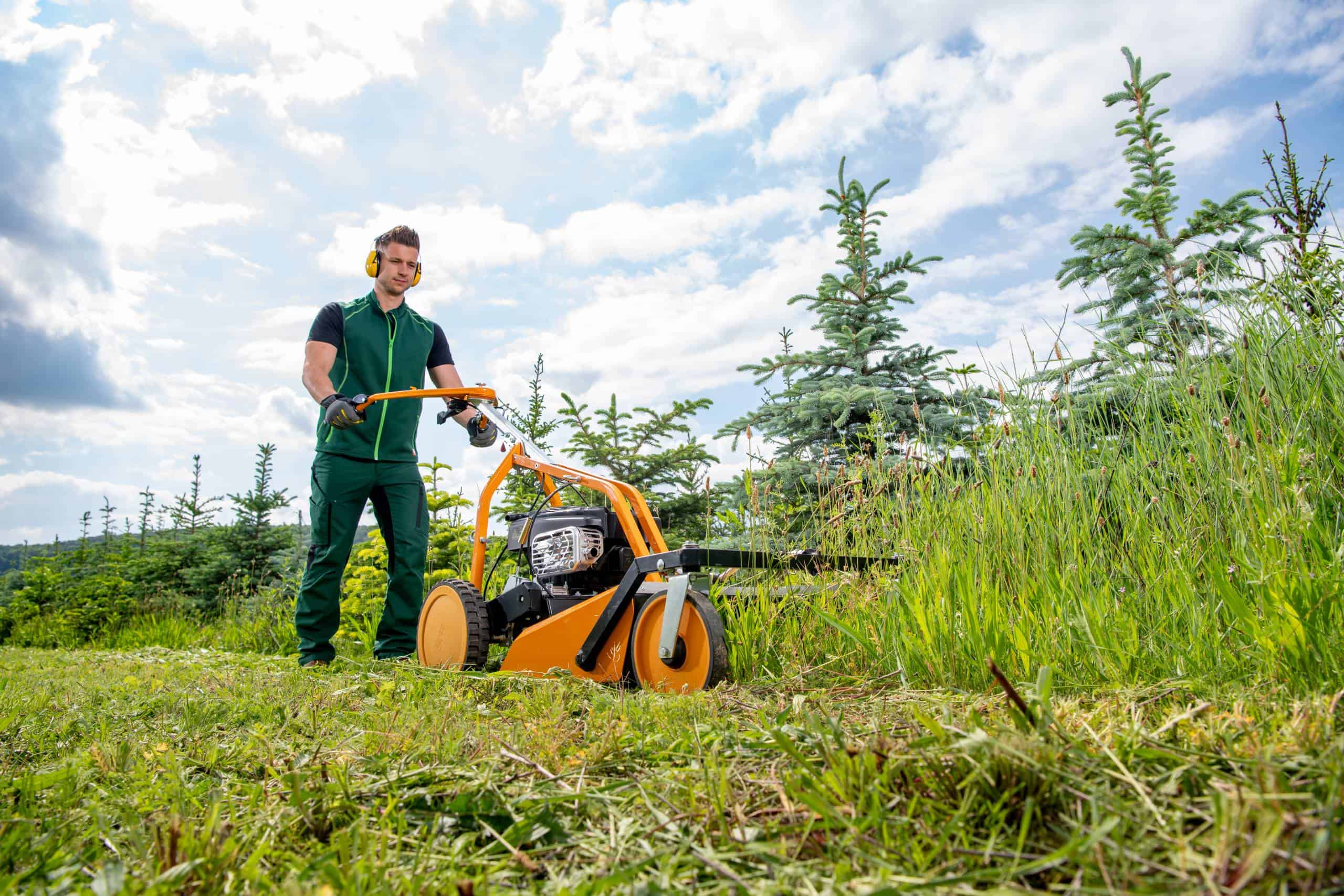
High meadow grass
Extensively used meadows such as orchards, compensation areas, or roadside greenery are deliberately mowed only once or twice a year. The vegetation reaches heights of 60 to over 100 cm and forms dense, structurally rich stands.
This form of maintenance serves to keep the area open and suppress woody plants, not to maintain the lawn. Machines with high throughput, uniform cutting performance, and controlled deposition of the cut material are required. This is the only way to efficiently manage large amounts of biomass without overloading the area or damaging the soil and vegetation.

Dense growth
Without maintenance, open areas quickly become overgrown with blackberries, clematis, and young trees. In young forests, reforestation areas, or Christmas tree plantations, targeted brush clearing is necessary to secure the desired structures and reduce competition.
It is crucial to use maintenance methods that intervene selectively and do not destroy large areas. Mechanical flail mowing technology makes it possible to remove woody growth and vigorous shrubs without unnecessarily damaging the soil structure and root space. This ensures that areas remain usable and ecologically stable in the long term.

Uneven terrain
Animal burrows, anthills, mole hills and water channels cause uneven terrain. Several AS-Motor machines have high ground clearance, all-wheel drive and limited slip differential, along with appropriately studded field tyres, for uneven terrain.
Slopes
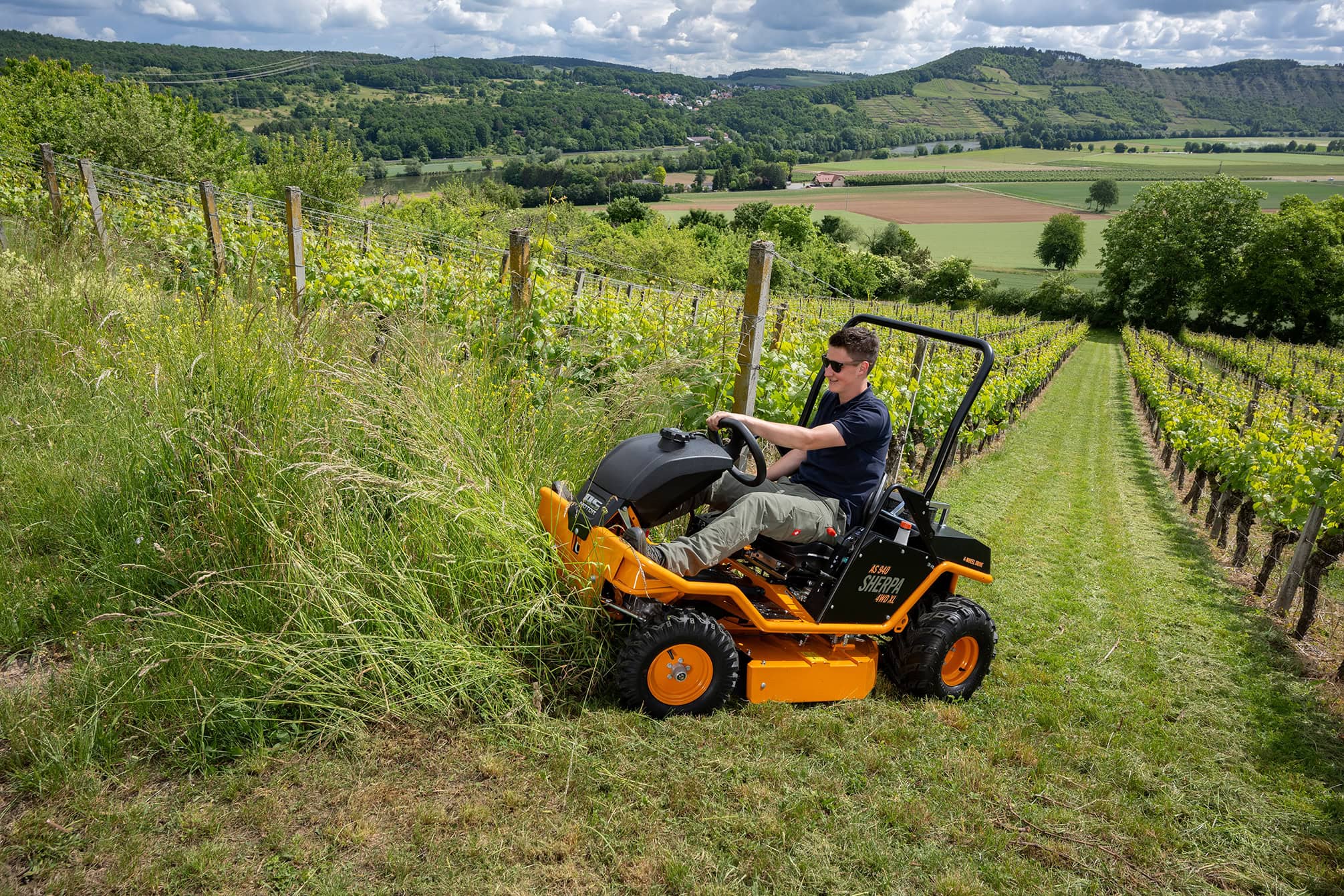
AS-Motor engineers machines with high ground clearance, steep ramp angles, low overall weight, optimal weight distribution and a low centre of gravity to perform on slopes.

All-wheel drive
All-wheel drive not only ensures performance on inclines over 30 degrees, but also a high level of safety for travel downhill. All-wheel drive delivers propulsion in wet conditions and on uneven terrain – even if the wheels of one axle no longer have traction.

Remote-control
Remote controlled devices make the mowing of extreme slopes possible. This technology also allows the operator to mow at a safe distance from dust, wasps, ticks and other hazards.
Ecological mowing & extensive land management
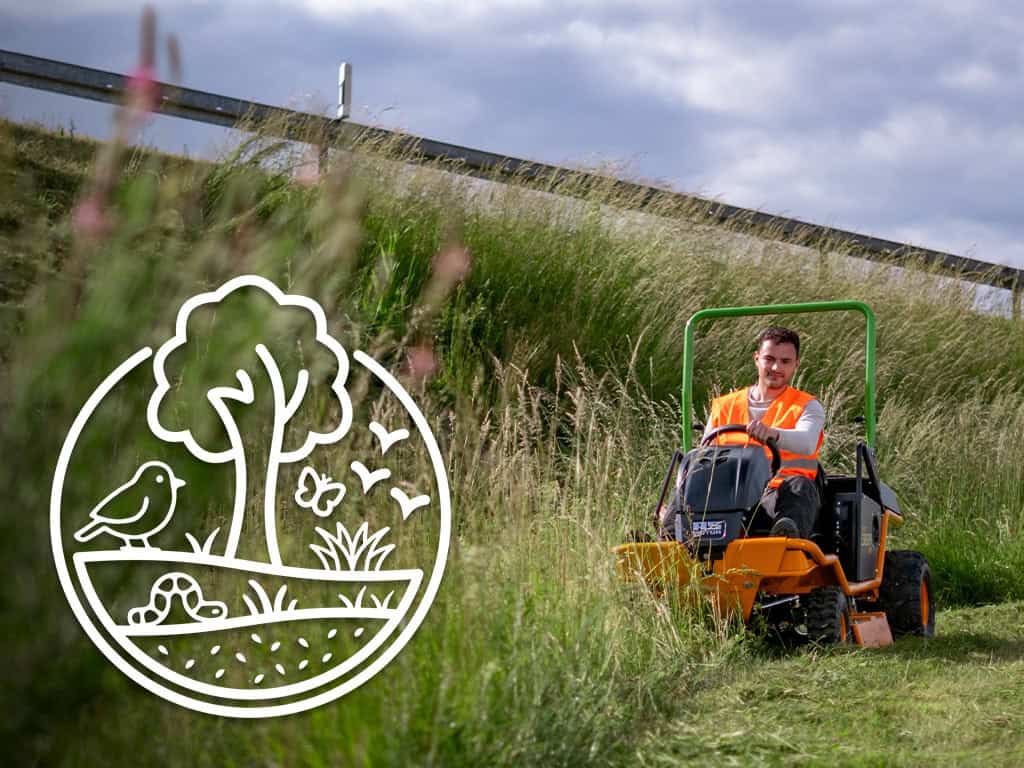
Ecological mowing and extensive land management focus on reduced, targeted interventions instead of blanket mowing. Cutting heights, timing, and maintenance intervals are based on vegetation development and site conditions, not on maximum area coverage.
Sub-areas are mowed on a rotating basis, while others are deliberately left untouched. This creates varying growth heights, refuges, and stable structures on extensive meadows, compensation areas, municipal green spaces, and in landscape management. Technology is used for control, not intensification.