AS-Motor engineers professional landscaping solutions
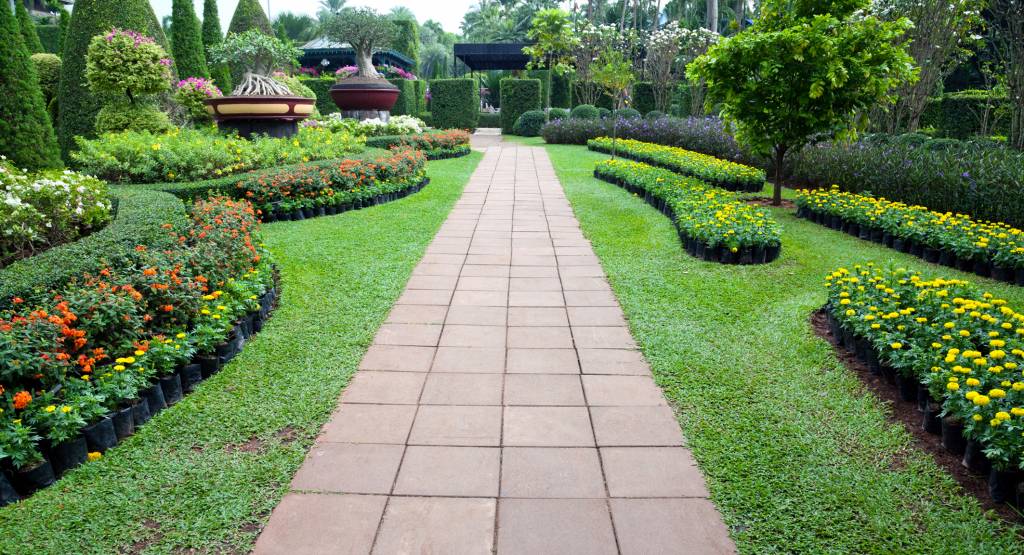
Professional gardeners and landscapers trust AS-Motor’s professional technology.
Landscapers and gardeners are responsible for a wide range of tasks. They must design, construct and above all maintain their customers’ green areas, such as private gardens, parks, large lawns surrounding public buildings, roadsides, sports facilities and cemeteries. Even tree care and conservation can come into play. Landscapers must deliver the highest-quality work while taking economic considerations into account. AS-Motor’s professional technology offers precise solutions for a variety of gardening and landscaping tasks.
AS-Motor applications in the landscaping sector:
Lawns of public buildings
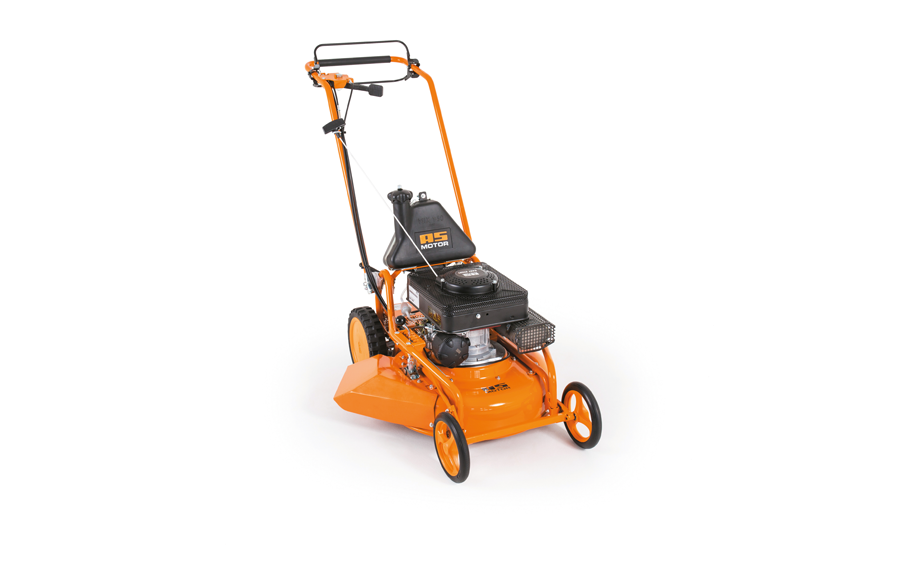
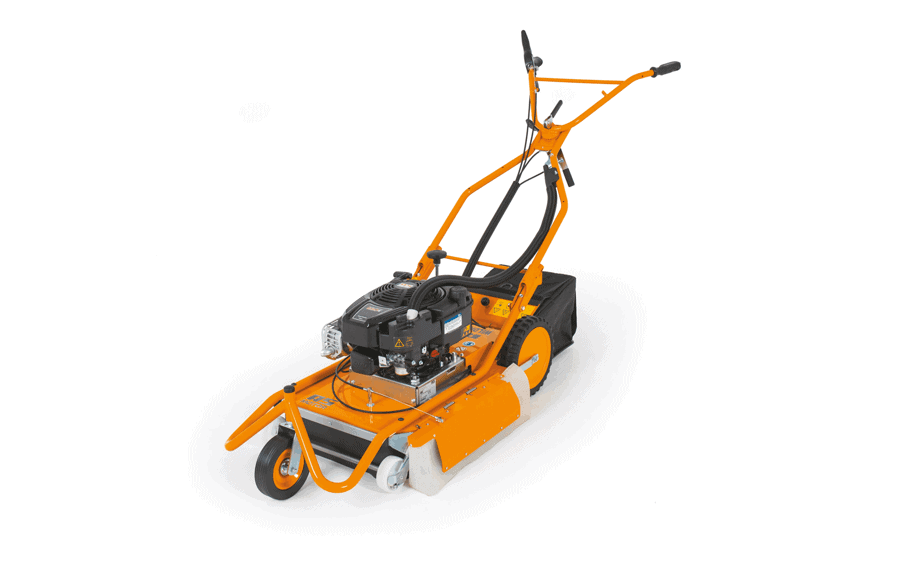
Green spaces enhance a building’s value and contribute to the experience of those who work there. The AS 531 professional lawn mower is an ideal solution due to its impressive performance in daily use.
Commercial green
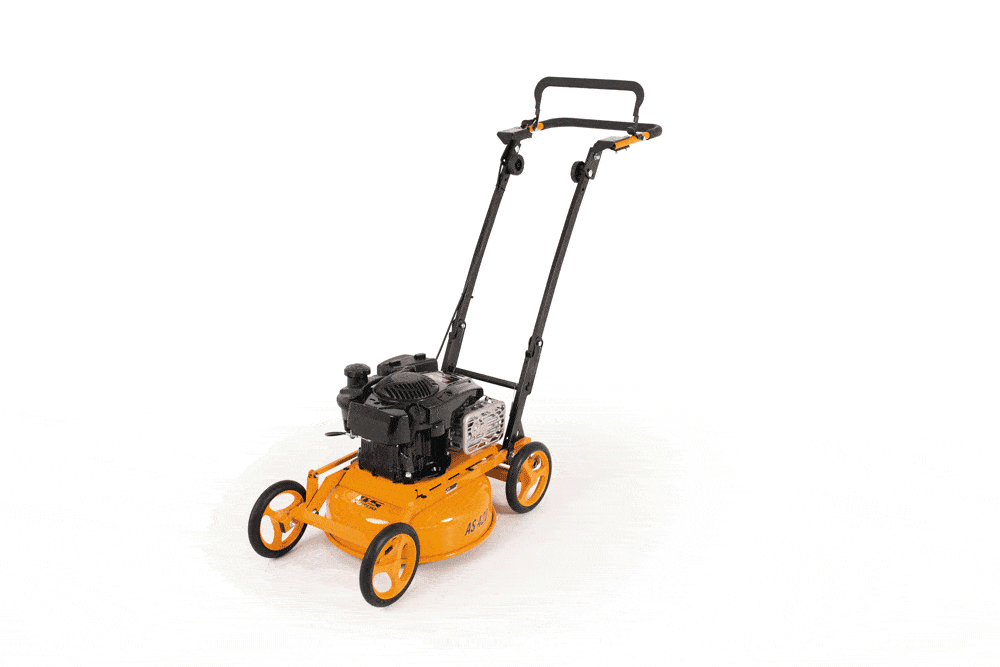
Lawns surrounding commercial buildings add to an enterprise’s prestige and professional image. Landscapers rely on AS-Motor’s professional mulching mowers for regular care of these areas.
Leisure facilities
The AS 531 walk-behind lawn mower with a collection bag is ideally suited for playgrounds while AS-Motor’s professional mulching mowers provide expert solutions for golf courses and sports fields.
Peripheral areas
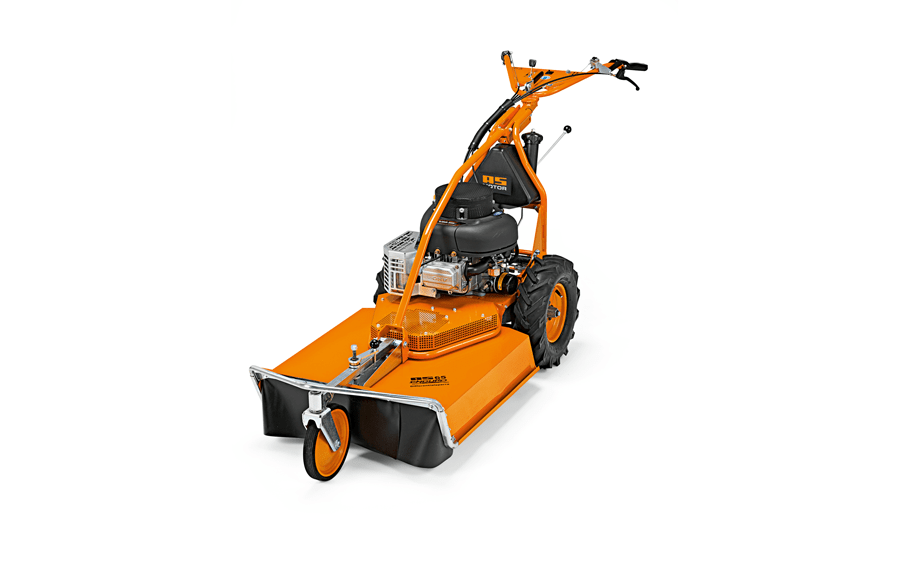
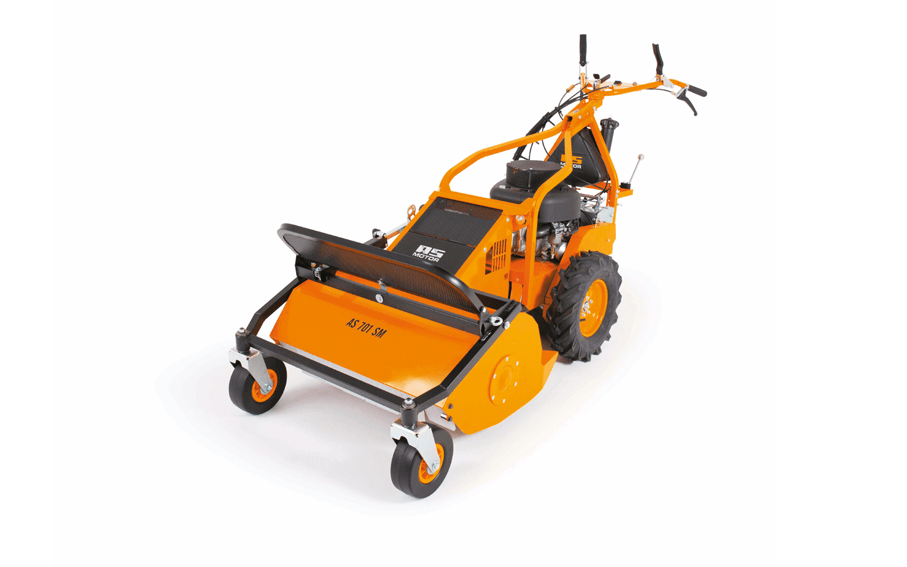
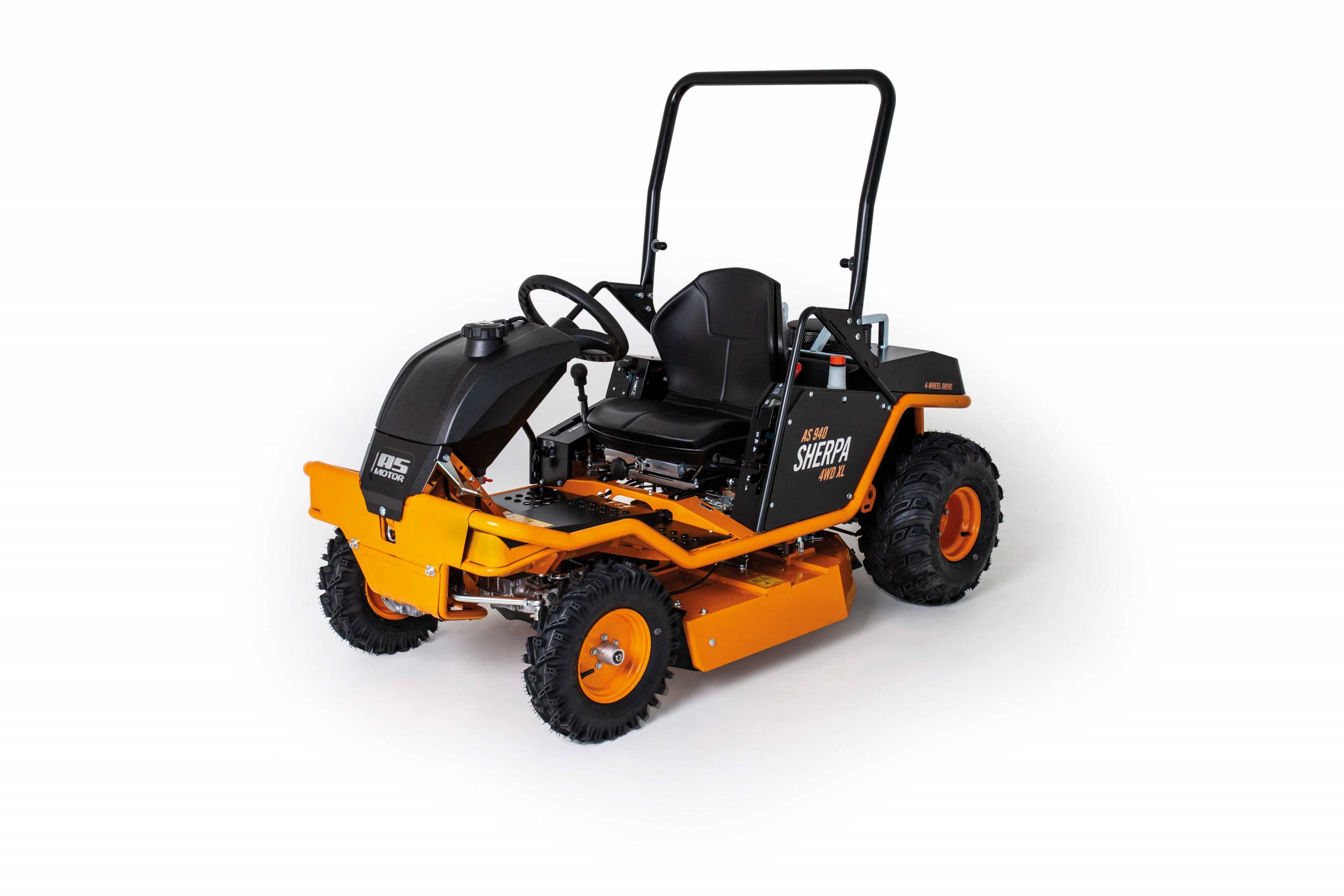
Not all areas must be mowed constantly – in certain areas, mowing once or twice per year suffices. Here, mulching provides an attractive solution and eliminates the time and cost-intensive process of disposing of cuttings. AS-Motor’s professional AS 65 and AS 73 Allmähers and walk-behind AS 701 and AS 901 flail mowers are recommended for light slopes. The remote-controlled technology of the AS 940 Sherpa RC guarantees efficiency and operator safety on extreme slopes.
Cobblestone areas
AS-Motor’s mechanical weed removers are designed for weed removal from cobblestone and paved areas without the use of chemicals. The AS 30 and AS 50 WeedHex achieve outstanding work results while respecting the environment and those who inhabit it.

As the owner of a landscaping business, I find the AS Motor 28/4 very helpful in maintaining neglected gardens and lawns that have not been mowed for 2-3 months. The 28/4 does the job very well and without any problems. Since we have a big van, the 28/4 is always with us and ready to fight with the tall grass wherever we go. To make it short, I think the machines are one thing above all: very time-saving.
– Tomislav Zaninović (owner of the landscaping company Tommaris kreativa, Croatia)

The AS Allmäher has met all my expectations. It is very lightweight machine for difficult terrain. It has a very simple and safe operation.
– Nikola Debeljak (Self-employed gardener in Zagreb, Croatia)

We have been working with AS machines for over 25 years. Most recently, the AS 940 Sherpa convinced us so much that we had already ordered the second machine. We also use the Sherpa for winter maintenance or as a 'small' tractor in places where our other machines cannot reach. Furthermore, the size of the machine is optimal so it can be transported without any problems - even in a van. At a landfill site, we used the AS 940 to transport plants because Sherpa was the only machine the client had no conserns about its weight.
– Robert Kühn (Managing Director of Kühn Garten-, Landschafts- und Sportplatzbau GmbH in Jessen, Germany)

We have been using the AS 53 Allrad for our ornamental lawns on slopes up to 45° for more than 15 years. For this extreme application, it is the only machine on the market that meets our requirements for quality and performance. The robustness of the machines has convinced us for a long time. In the meantime, we have a fleet of 6 AS machines that provide us with loyal service at all times.
– Ralf Mainz (Master Gardener of Stiftung Stift Neuzelle, Germany)

Mow stresssless with AS!
– Mario Balduzzi (Horticulturalists and landscape designer from Weil am Rhein, Germany)
Categories

All-wheel drive
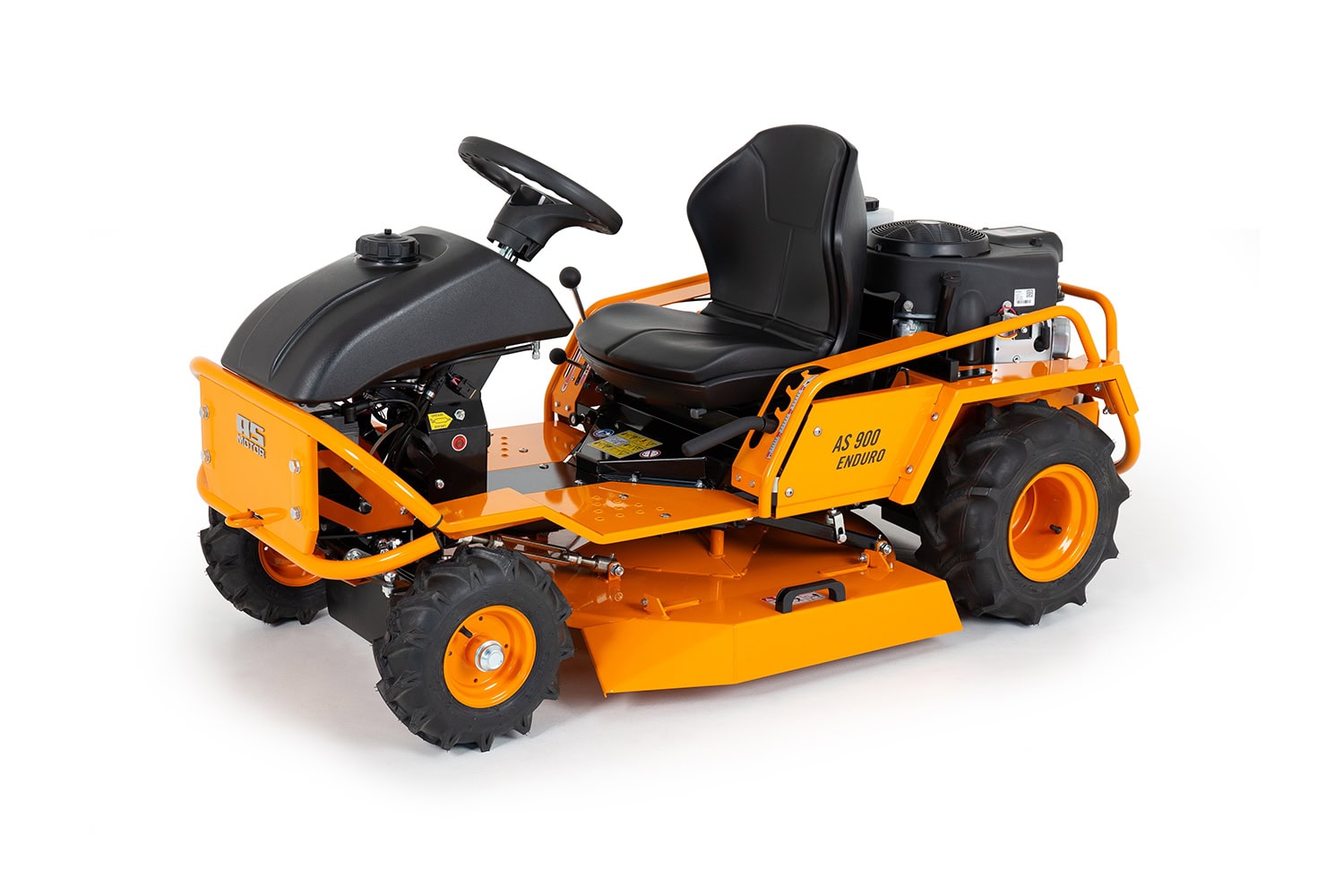
All-wheel drive not only ensures performance on inclines over 30 degrees, but also a high level of safety for travel downhill. All-wheel drive delivers propulsion in wet conditions and on uneven terrain – even if the wheels of one axle no longer have traction.

Flower meadows
Flower meadows are structurally rich habitats that are extremely important for insects, wild bees, and species that depend on flowers. The key is not to mow frequently, but to cut at the right time. Before the flowering phase, the vegetation can quickly reach heights of 30–40 cm. After that, maintenance is carried out at longer intervals, usually once or twice a year.
This form of extensive use requires machines that can safely cut tall, heterogeneous vegetation without putting unnecessary strain on the area. Clean cuts, controlled deposition, and an adapted driving style are essential for preserving plant populations and enabling regeneration.

Remote-control
Remote controlled devices make the mowing of extreme slopes possible. This technology also allows the operator to mow at a safe distance from dust, wasps, ticks and other hazards.
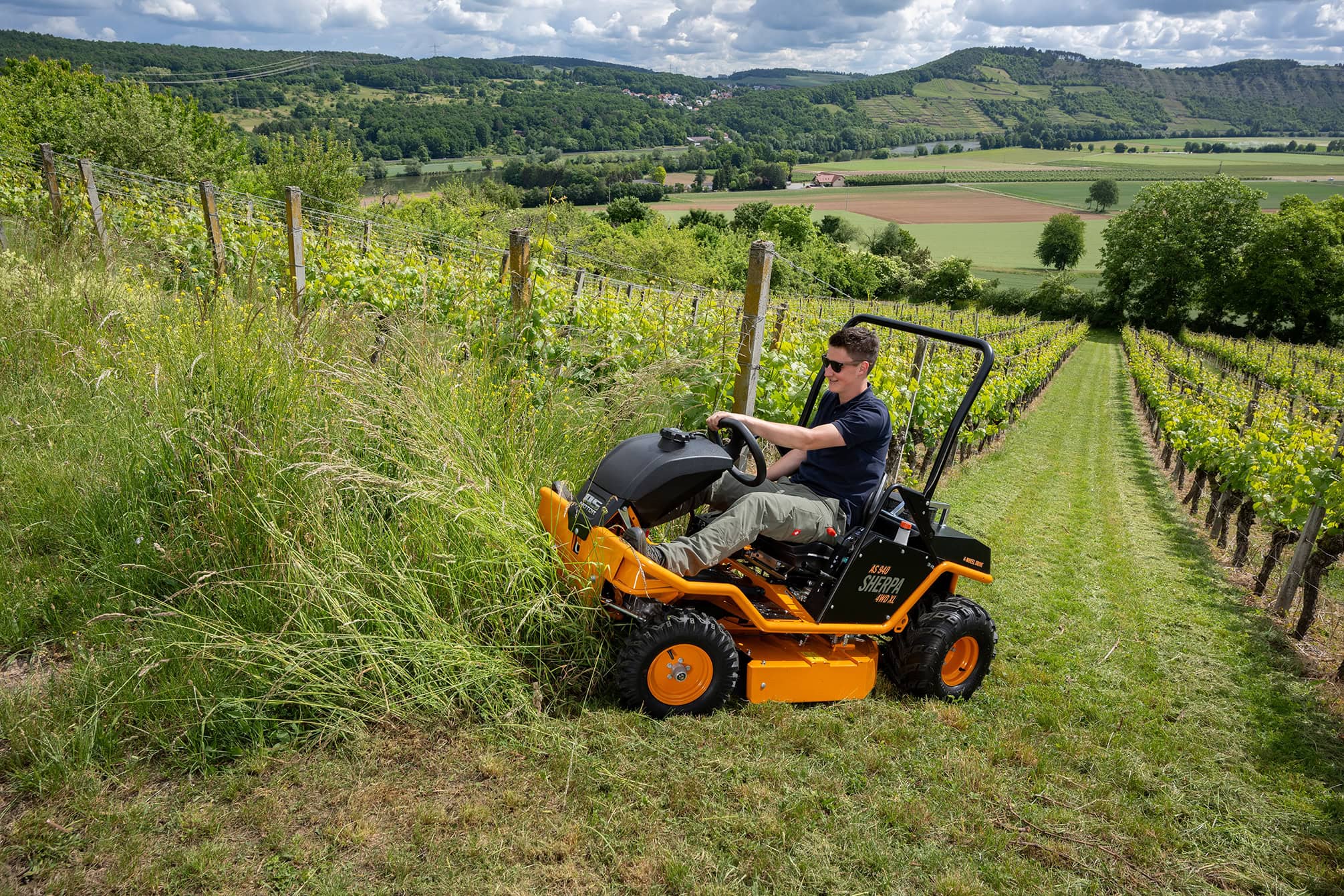
Slopes
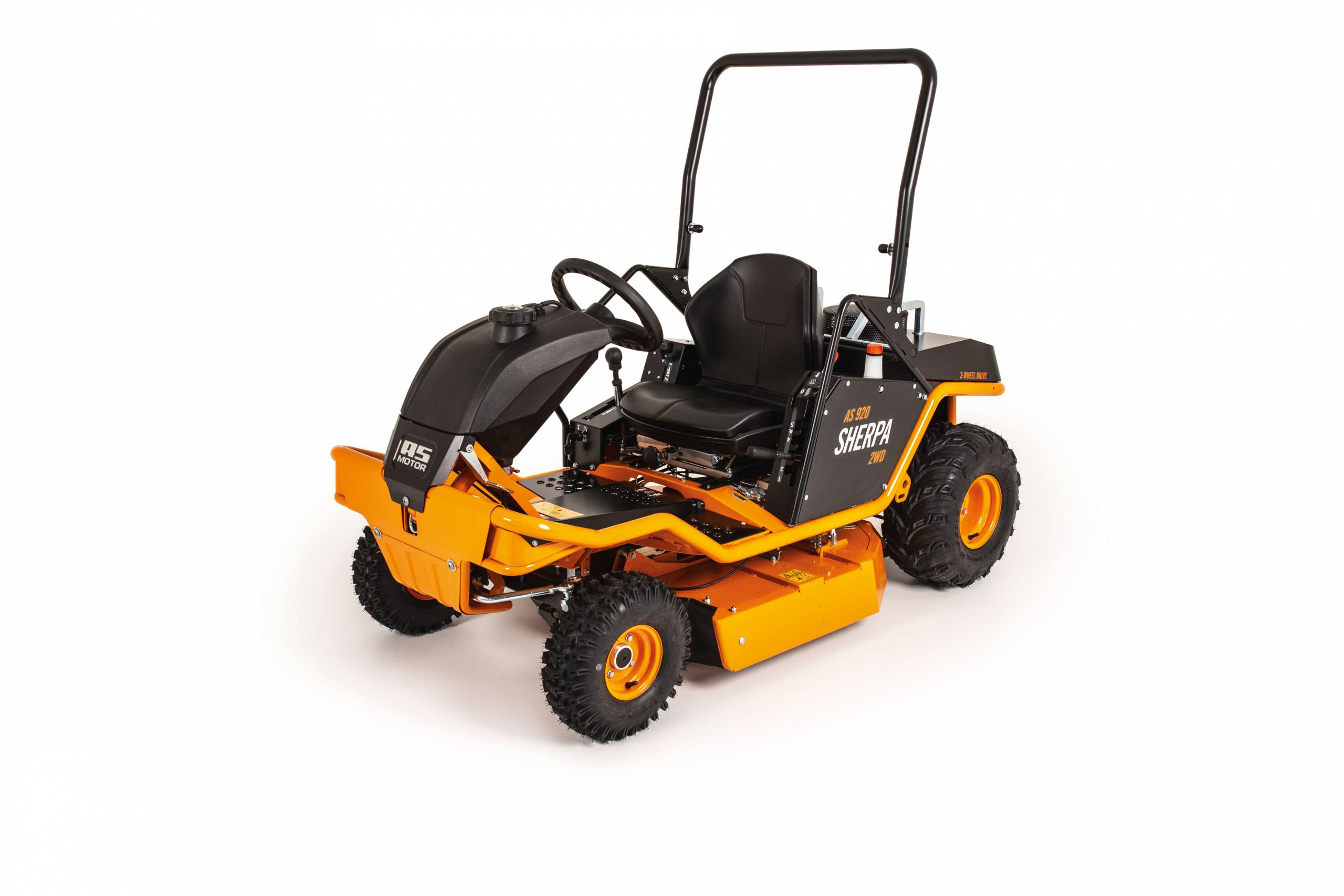
AS-Motor engineers machines with high ground clearance, steep ramp angles, low overall weight, optimal weight distribution and a low centre of gravity to perform on slopes.
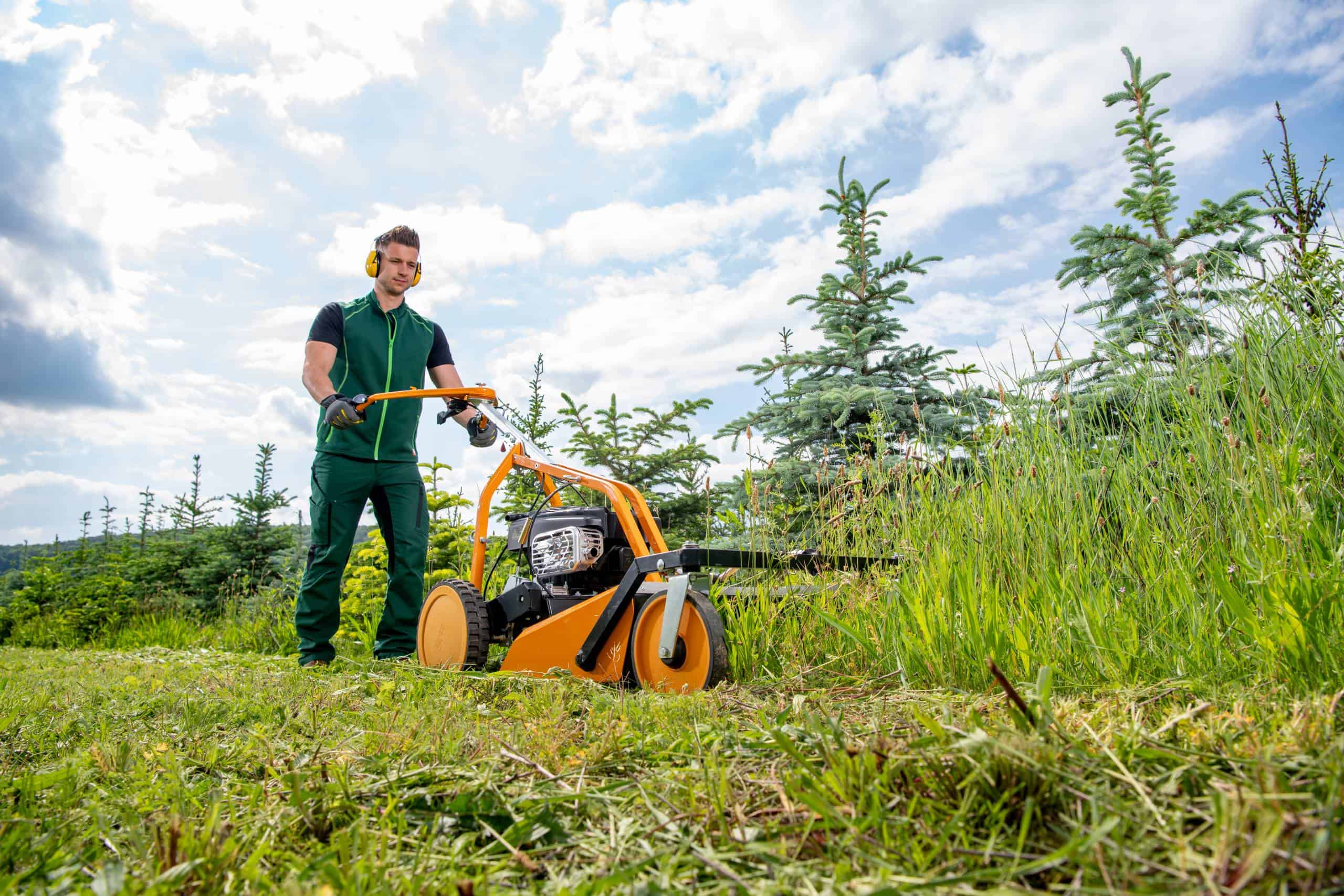
High meadow grass
Extensively used meadows such as orchards, compensation areas, or roadside greenery are deliberately mowed only once or twice a year. The vegetation reaches heights of 60 to over 100 cm and forms dense, structurally rich stands.
This form of maintenance serves to keep the area open and suppress woody plants, not to maintain the lawn. Machines with high throughput, uniform cutting performance, and controlled deposition of the cut material are required. This is the only way to efficiently manage large amounts of biomass without overloading the area or damaging the soil and vegetation.

Professional technology
During the mowing season, professional operators often run their machines 5 days per week, 8 hours per day. AS-Motor’s machines are unbeatable in terms of quality, durability and professional work results. Additional advantages include low weight, lashing points and compact transport dimensions.

Uneven terrain
Animal burrows, anthills, mole hills and water channels cause uneven terrain. Several AS-Motor machines have high ground clearance, all-wheel drive and limited slip differential, along with appropriately studded field tyres, for uneven terrain.

Ornamental lawns
Ornamental lawns in both private gardens and public facilities can be maintained with either mulching or collecting mowers. When mulching, the finely-shredded cuttings remain on the surface as natural fertiliser, while collection bags help the operator transport cuttings to a disposal point. Lawns are usually mowed once per week to a cutting height of 40–50 mm, from a maximum height of 15 cm.

Interlocking paving stones
The AS 50’s high work rate delivers efficient weed removal on large and uneven surfaces such as a car parks, commercial areas and paths. A collection bag eliminates the need for sweeping and surface cleaning.

Mulching
Mulching is a process by which grass cuttings are shredded several times into a fine mulch, which then remains on the surface as natural fertiliser. Special mulching blades with a double cutting plane and a circular mulching unit are used on ornamental lawns, while cross-blade systems or flail mowers are primarily used in high grass.
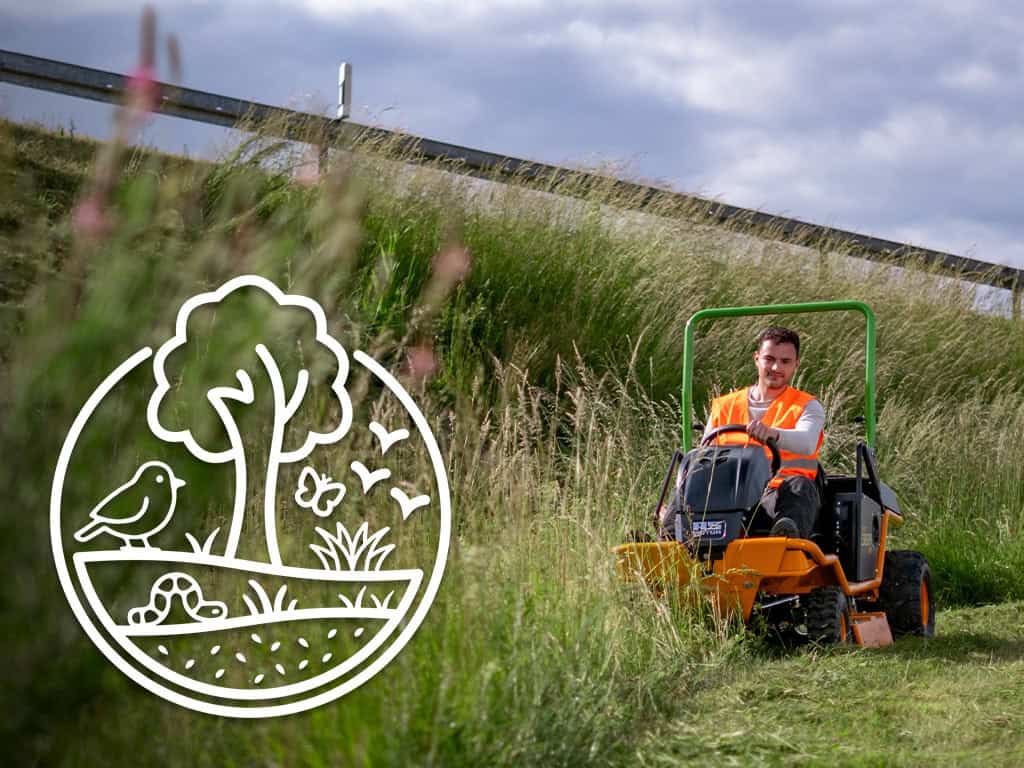
Ecological mowing & extensive land management
Ecological mowing and extensive land management focus on reduced, targeted interventions instead of blanket mowing. Cutting heights, timing, and maintenance intervals are based on vegetation development and site conditions, not on maximum area coverage.
Sub-areas are mowed on a rotating basis, while others are deliberately left untouched. This creates varying growth heights, refuges, and stable structures on extensive meadows, compensation areas, municipal green spaces, and in landscape management. Technology is used for control, not intensification.